Her mother had not come into the sewing room after all. She had stopped in the doorway, taken in Lila kneeling by the wardrobe with the drawer pulled out, and said only, in a voice scraped raw, “I told you to bag these rooms,” and then she had turned and gone back down the hall, and the fight had drained out of both of them because the next day was moving day and there was no room left for it.
So Lila had pressed the loosened panel gently back until it clucked home, and she had said nothing, and she had lain awake half the night with the hollow sound in her ears.
Moving day came gray and spitting rain. The aide came, and a cousin of Rose’s with a pickup, and the man from Cedar Run with the van and the ramp. They carried out the recliner and the good lamp and the box of photographs and the framed Black Madonna, the few things that would fit in one room of the rest of a life. Stefania sat in her wheelchair in the middle of the emptying front room and watched them take her house apart around her, and she was, that morning, terribly and continuously lucid, which was worse than the fog.
“Not the davenport,” she said. “The davenport stays, somebody will want it.” And later, “Henryk’s chair, give that to the Mazur boy, Joseph’s grandson, he admired it once.” And later still, watching them wrap the console television that had not worked in thirty years, a small dry laugh. “We watched the men walk on the moon on that set. The whole street came. Henryk made the highball glasses go around.” She shook her head. “Such a long time ago. Another country.”
When most of it was out and the rooms stood echoing, the man from Cedar Run crouched by her chair and said, kindly, “Anything else you want to bring, Mrs. Wojcik? Anything special? We’ve got room for a few keepsakes in your new place.”
Stefania thought about it. Lila, taping a box in the hall, found herself listening with her whole body.
“The little chest of drawers in the sewing room,” her grandmother said. “The walnut one. The wardrobe.” A pause. “No. No, leave it. It is too big. It will not fit.” Another pause, longer, and her voice changed, went down into something private. “Leave it where it is. It has stood there a long time. Let it stand.”
Lila kept her eyes on the box and her hands moving and her face still.
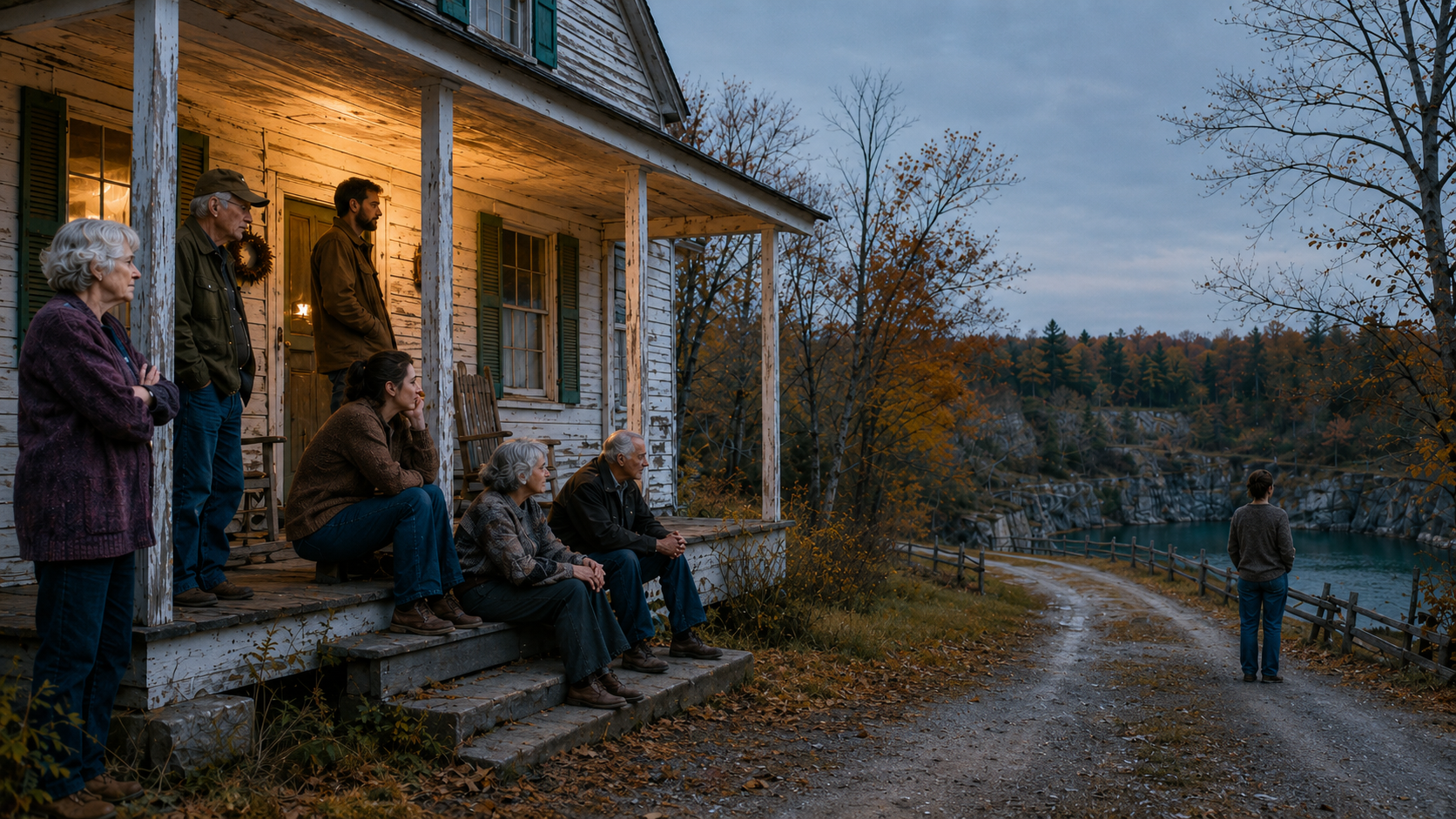
They got Stefania into the van last, under an umbrella, the rain coming harder now. And at the foot of the ramp, with the lift gate humming and the aide fussing the blanket over her knees, the old woman turned her head and looked back at the house, at the white clapboard going dark with wet, at the green shutters, at the north window where the gray light showed nothing.
And Lila, standing close, holding the umbrella, heard her grandmother say it. Not to Lila. Not to anyone living. She said it low, in Polish, three or four words, the way you’d say goodbye to someone standing just out of sight, and then in English, almost too soft to catch, she said, “I am sorry I have to leave you up there. I tried to come every day.”
The lift gate rose. The van door closed. Rose got in her own car without a word and followed it down the gravel toward town, and Lila stood alone in the rain in front of the empty house with the umbrella over her head and the cold working up through her shoes.
I am sorry I have to leave you up there.
Up there. The road. The parcel. The piece of ground that did not get sold, that nobody dug, where there was nothing, nothing, nothing at all.
Lila folded the umbrella and let the rain come down on her and looked up the gravel road into the trees, and she understood, all at once and with no doubt left in her, that whatever stood behind the false back of that wardrobe and whatever lay quiet up that road were the same secret, and that her grandmother had spent her whole long life keeping it, and that she, Lila, was now the only one in the world both willing and able to find out what it was.
She went back into the empty house and turned on every light against the dark coming early with the rain, and she walked down the hall to the sewing room, and she knelt in front of the wardrobe.