Most of us worry more about staying sharp than staying wrinkle-free. That is just the reality of getting older. So when a new study suggests that something as simple as when you eat might protect your brain, it is worth a closer look.
Researchers led by Dr. Yvette Schlussel studied whether time-restricted eating, sometimes called intermittent fasting, could help maintain or improve cognitive function in women between the ages of 50 and 79.
How the Study Worked
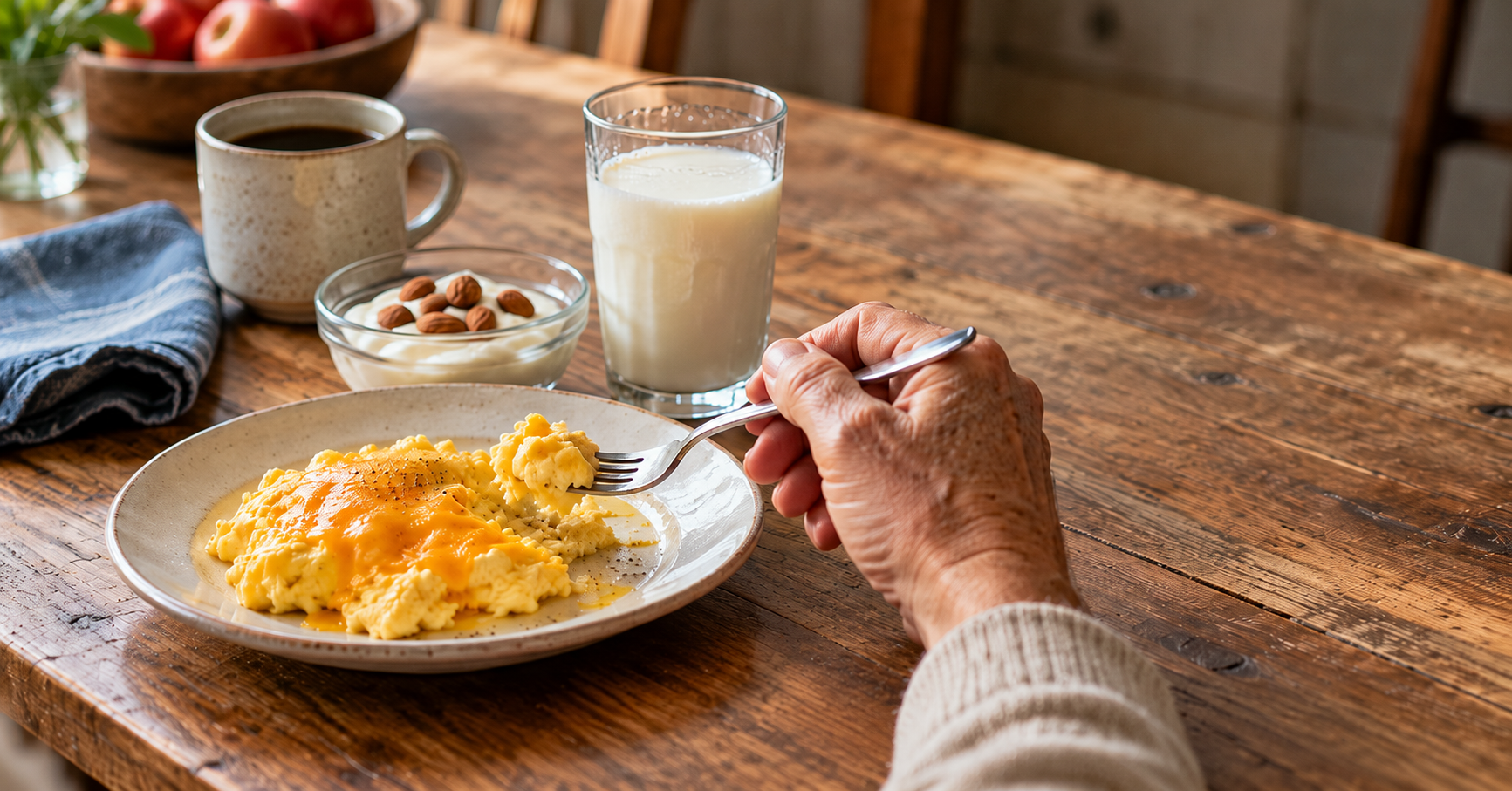
Participants were split into two groups. One group ate all their meals within a 9-hour window each day. The other group ate over a more typical 12-hour period. Both groups were also advised to cut their daily calorie intake by 500 calories. That part was the same for everyone.
The two groups lost about the same amount of weight, roughly 15 pounds, or 6.8 kilograms, on average. So weight loss alone does not explain what happened next.
What the Researchers Found
The women who kept their eating to a 9-hour window showed significantly greater improvements in planning and problem-solving. They also tended to make fewer memory and learning errors, though that difference did not reach statistical significance.
Reaction time and multitasking showed no significant differences between the two groups.
There was one especially interesting finding. The women who shortened their eating window the most tended to see the greatest cognitive improvements. In other words, the bigger the change, the bigger the benefit.
Why Meal Timing Might Matter for Your Brain
Dr. Schlussel and her team suggest that when you eat can influence brain health in several ways. They point to effects on circadian rhythms, inflammation, metabolic health, and nutrient-sensing pathways.
In short, your body clock may have more to do with how your brain ages than most of us ever realized.
The study was presented at NUTRITION 2026, the annual flagship meeting of the American Society for Nutrition. It has not yet been officially published in a journal, but the full abstract, including the method and results, is available to read online.
If staying sharp is a priority for you, this research gives you one more reason to pay attention to the clock on the kitchen wall, not just what is on the plate.