
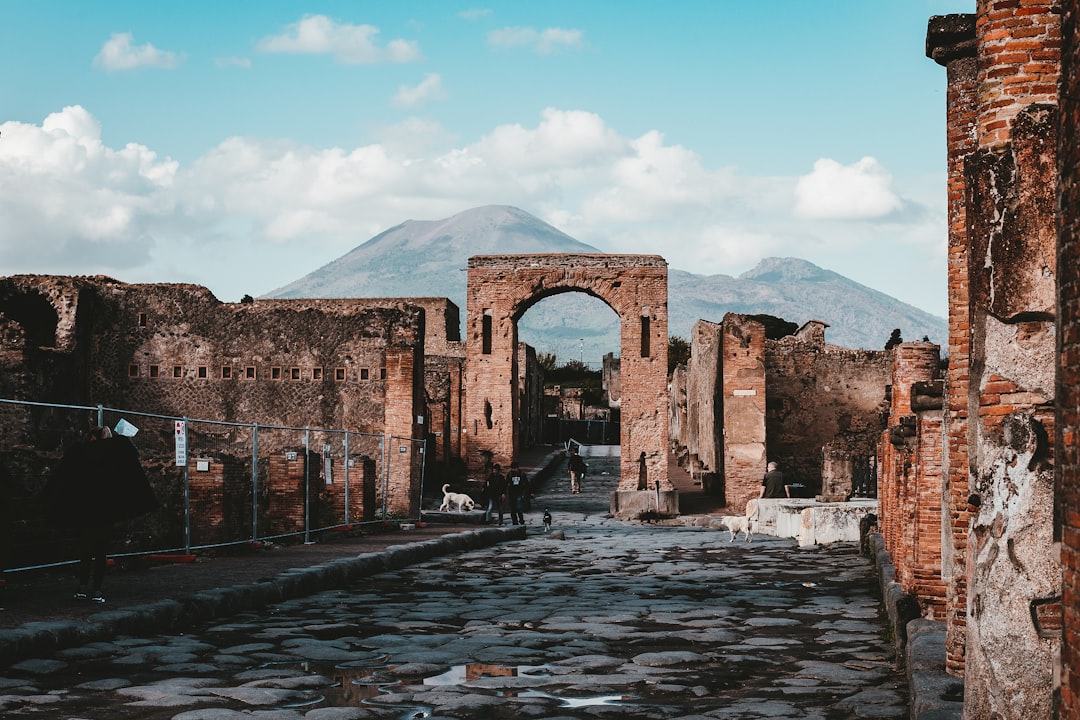
In AD 79, Pompeii was a busy, living city. More than 12,000 people called it home. They had factories, bathhouses, shops, taverns, temples, and even an arena. They cooked dinner, locked their doors, and said their prayers.
Then Mount Vesuvius erupted and buried all of it within 24 hours.
When explorers rediscovered Pompeii in 1748, they found something remarkable. Buildings were still standing. Possessions were right where people had left them. Even skeletons remained intact. Nearly 2,000 years under volcanic ash had kept it all perfectly preserved.
What those archaeologists found tells us something that still gives you pause today: the people of Pompeii lived lives that feel surprisingly close to our own. Here is a look at eight things you would have found in almost every home.
Oil Lamps
Before electric light, there was oil. Pompeians burned oil lamps to light their homes at night. Candelabra, some tall columns with floral molding, others shorter for the tabletop, were designed to hold them. A few bronze candelabra were crafted purely for show. Most were simply practical, common in homes and public spaces alike.
Storage Jars
Forget the neat rows of Mason jars in today’s pantries. Pompeians stored their goods in large clay pots called amphorae. These were shaped with pointed bottoms so they could stand upright. Many were inscribed to show what they held.
One jar, excavated in 1941, was marked as a vessel originally used to transport grain, then repurposed for something else entirely in the home where it was found. You can see examples of this pottery today at the British Museum in London and The Metropolitan Museum of Art in New York City.
Mortars and Pestles
The mortar and pestle sitting in your kitchen cabinet? It has a very long history. Pompeians used the same tool for the same purpose, grinding spices and herbs into paste for their meals.
These objects tell a more personal story, too. Marcello Mogetta, associate professor of Roman art and archaeology at the University of Missouri, told Popular Science that many Pompeians tried to flee toward the coast when the ash began to fall. One man, believed to be in his 20s or 30s, was found carrying a lamp, some coins, and a terracotta mortar. He brought the things he simply could not leave behind.
Pots, Pans, and Utensils
Bronze was the go-to material in a Pompeian kitchen. It was used for frying pans, bread pans, colanders with long handles, and other utensils. Those colanders also doubled as wall decor, their geometric designs making them something to look at as well as cook with.
Terracotta pots went on the hearth, set among charcoal and embers, sometimes placed on iron stands or hung by chains above the fire. Middle-class Pompeians even had baking ovens, similar in size and shape to a modern pizza oven. Spoons and knives were made from bronze or brass, with handles of wood and bone. In wealthier homes like the House of Menander, silver was used instead.
Bowls, Cups, and Plates
Everyday tableware was shaped from clay, in sets known as Samian ware, and from terracotta. Blown-glass pitchers occasionally joined the table. When Pompeians ate out, they headed to street food stalls called thermopolia, essentially the food trucks of their day, where hot meals were served in terracotta jars.
One such stall was discovered in pristine condition at the Pompeii Archaeological Park in 2020. It was ornately decorated with paintings of animals. Excavators found ceramic bowls, wine flasks, and decorated bronze drinking bowls called patera right on the premises. What was on the menu? Duck, goat, pig, fish, and snails, according to NPR, and wine, if your wealth allowed it.
Shrines
Spiritual life was woven into the fabric of everyday Pompeian homes. Shrines called lararia appeared in kitchens, gardens, and public spaces. Residents burned incense, offered animals, and made prayers to Roman gods. Some shrines were simple wall niches. Others were entire rooms devoted to worship.
Families left offerings of figs, nuts, and eggs at these shrines and honored their ancestors with busts placed nearby. The shrines were elaborately painted: Roman gods, wild animals, snakes, and even nods to Egyptian deities, reflecting what Smithsonian Magazine described as Pompeii’s clear fascination with Egyptian culture.
Lock-and-Key Sets
Pompeians locked their doors, just as we do. Their locks began as wood and later shifted to metal, known as pin tumbler locks with steel springs. Slide keys found throughout the ruins were used to secure homes, lock boxes holding jewelry and valuables, and even fasten shackles.
It is one of those small details that closes the distance between their world and ours.
Wooden Furnishings
Wood was everywhere in a Pompeian home: tables, cabinets, cupboards, chests, shelves, and the beams that held structures together. In 2021, excavators at the Pompeii Archaeological Park documented several wooden furnishings, some believed to have been used for leisure. Each piece was cast and examined in detail, adding another layer to our picture of daily life in southern Italy in AD 79.
All of it, like the lamps, the jars, the kitchen tools, the shrines, was preserved not by design, but by disaster. And nearly 2,000 years later, it still tells us who these people were.