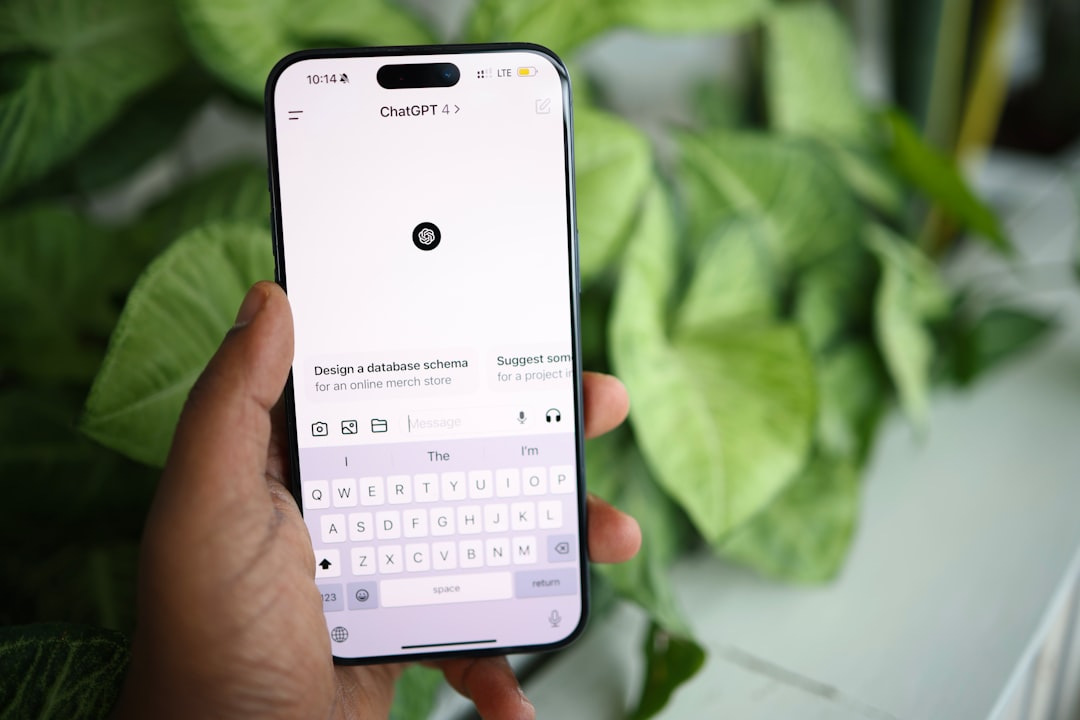
AI chatbots like ChatGPT, Gemini, Claude, and Meta AI have become part of everyday life for millions of Americans. A September 2025 Pew Research poll found that 65% of Americans use AI at least several times a week. It is easy to see why; these tools are quick, conversational, and surprisingly helpful.
But there is a catch. The more you share with a chatbot, the more personal information ends up stored somewhere you cannot fully control. And that can lead to real problems.
Two experts, John Pavolotsky, a San Francisco-based attorney and co-chair of the AI, Privacy and Cybersecurity group at Stoel Rives, and Nicola Dell, an associate professor at Cornell Tech, broke down exactly what you should keep to yourself. Here is what they said.
Why AI Privacy Is a Bigger Issue Than Most People Realize
When you type something into a chatbot, more people may see it than you think. According to Pavolotsky, both the company that built the chatbot and the business using it can see what you type. Other service providers and even advertisers may have access too.
Right now, there are no federal laws specifically protecting your privacy when you use AI. California’s Consumer Privacy Act was updated in 2025 with new AI rules, but those do not take effect until 2027. For most Americans, companies can store and use your chat data with very few restrictions.
There is one more thing worth knowing. These tools are built to agree with you. “Worryingly, these tools are built to be sycophants and to mostly support or agree with users’ opinions or perceptions,” Dell says. That makes them feel reassuring, but it also means they won’t push back when they should.
The 5 Topics to Keep Away From AI
You probably already know not to give a chatbot your Social Security number, bank account details, or passwords. But the list of sensitive topics goes further than that.
1. Your Health
AI chatbots are not covered by HIPAA, which means your medical information does not have the same legal protections it would with a doctor. Anything you share could potentially reach insurance companies, advertisers, or other parties.
The accuracy problem is just as serious. A February 2026 randomized study found that only 34.5% of AI language models came up with the correct medical diagnosis and small differences in how a question was worded made a big difference in the result. “Although the chatbot may sound confident, these tools still make a lot of mistakes,” Dell says. Always trace any health information back to a verified medical source.
2. Mental Health Struggles
Because AI is trained to agree and validate, it can make mental health struggles worse rather than better. “Where a human mental health professional might push back, provide counterpoints and help someone reach a healthier place, a chatbot is more likely to confirm or amplify unhealthy ideas,” Dell says.
On April 22, 2026, the American Medical Association urged Congress to strengthen laws protecting mental health patients who use AI tools. This is a serious enough concern that the nation’s largest doctors’ organization stepped in.
3. Legal Matters
Attorney-client privilege does not apply to AI. A U.S. District Court judge confirmed this in February 2026 in the case United States v. Heppner. That means anything you discuss with a chatbot about a legal dispute; a divorce, a lawsuit, a financial disagreement could potentially be subpoenaed in court.
If you want to know whether a specific AI tool protects your inputs legally, Pavolotsky says to read its privacy notice carefully. “Most notices would provide that if the information is properly subpoenaed, it may be provided to the requesting authority,” he says.
4. Anything Illegal, Even Out of Curiosity
Using AI to research illegal activities violates the terms of service for these tools, Pavolotsky says. Your query and the conversation that follows can be subpoenaed by law enforcement. “We have seen quite a few instances of this,” he adds.
Most AI companies retain your chats and can share them with law enforcement if required. Dell notes that in most cases, a human would review a flagged conversation before any action is taken but the data is still stored and accessible.
5. Conspiracy Theories
Most AI chatbots have guardrails around controversial topics, but those guardrails can sometimes be bypassed. If they are, the chatbot’s tendency to agree with the user kicks in, which means it may reinforce false or misleading ideas rather than correct them. “The chatbot is again likely to respond in ways that are sycophantic and that confirm or support a user’s beliefs or opinions,” Dell says.
How to Protect Yourself Going Forward
If you have already shared something sensitive with a chatbot, you have options. Dell says many chatbots let you delete your chat history in settings, which can prevent others from seeing your conversations and may also remove your data from the company’s servers.
Here are a few more steps worth taking:
- Delete specific chats — Go into settings and remove the conversations you want gone.
- Erase its memory — Many AI tools store information about you even after a chat is deleted. Look in settings for a memory feature and clear it.
- Tell it to forget — You can directly instruct many AI chatbots to forget specific information, and they are designed to comply.
- Opt out of data training — Most AI tools use your chats to train their models unless you turn that off. Dell says you usually have to explicitly opt out in settings.
- Use a temporary chat — Some tools offer a session that is not stored at all.
Keep in mind that even after you delete a chat, companies typically store a backup for around 30 days. And if the company is involved in a lawsuit, they may be required to preserve data regardless of your deletion request.
The simplest rule of thumb comes from Pavolotsky himself: “Do not input anything into it that you would not want publicly shared.” That is good advice for any tool on the internet, and especially for one that is still learning the rules.