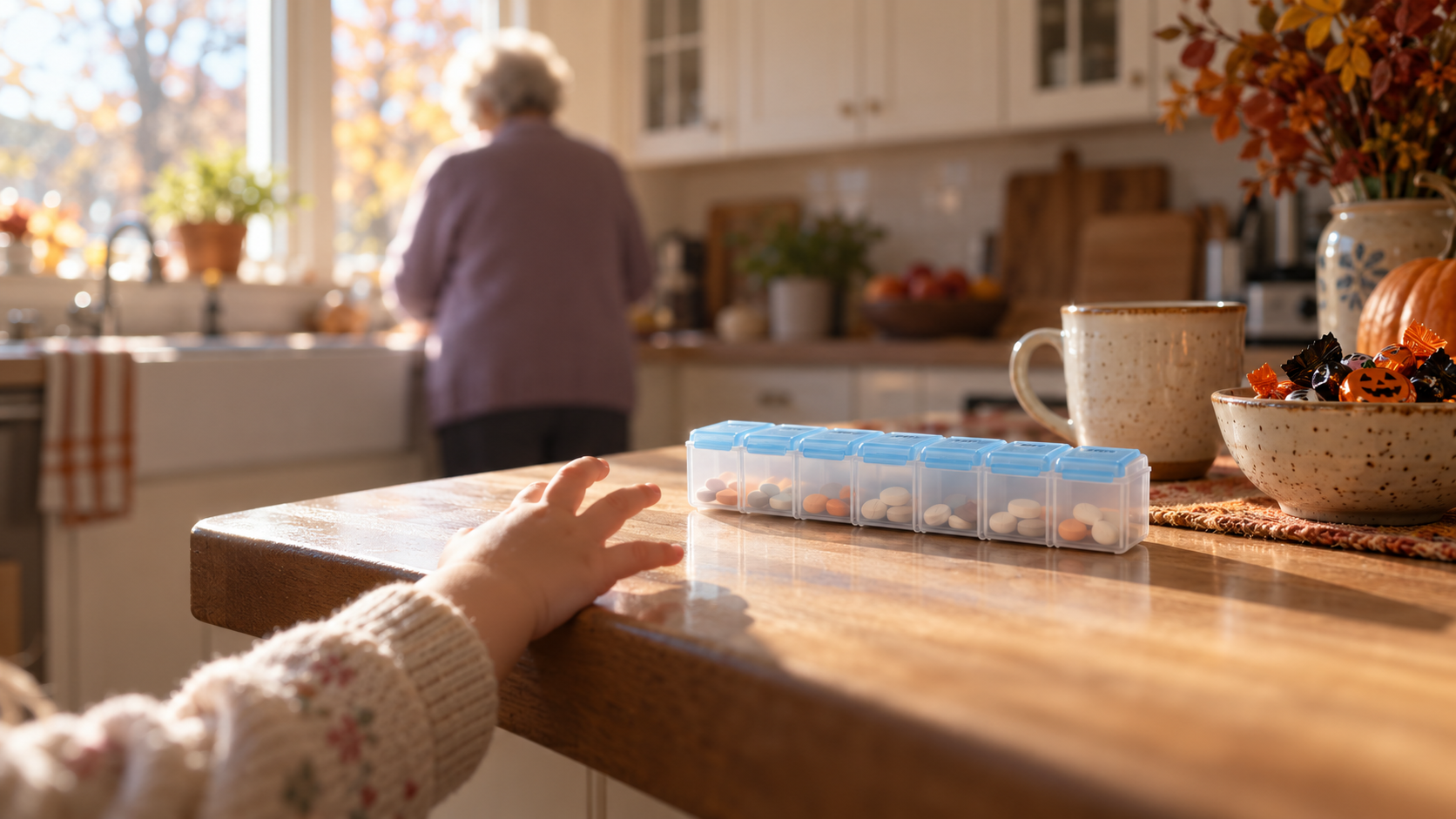
Grandchild With a Food Allergy? Start in Your Own Kitchen
October 22, 2026 — 65Nation

The text arrives a few days before the visit. “Just a reminder, Mia can’t have anything with peanuts or tree nuts. Please check labels. Thank you!”
You read it twice. Somewhere in the back of your mind, a small voice says: we did not have all this when ours were little. And that is true. But the allergy is real, the stakes are real, and the good news is that most of what keeps a grandchild safe happens in a place you have run for fifty years. Your kitchen.
This Is Not Fussiness
Nearly 6 percent of American children have a diagnosed food allergy, according to the CDC’s 2021 national health survey. A large study in the journal Pediatrics found that among children with a food allergy, more than four in ten had already had at least one severe reaction. Peanut, milk, shellfish, and tree nuts were the most common triggers.
The advice has also changed in ways that can look backward from the outside. In 2000, the American Academy of Pediatrics told parents of high-risk babies to keep peanuts away until age three. That guidance was dropped in 2008 because it did not help. Then a landmark trial showed the opposite approach worked: feeding peanut products early to high-risk infants cut the rate of peanut allergy by 81 percent. Since 2017, the National Institutes of Health has recommended introducing peanut foods to high-risk babies as early as four to six months, with a doctor’s guidance. So if your daughter-in-law is spooning thinned peanut butter into a six-month-old, she is following the doctors, just as you did.
The Label Is Your Best Friend
By law, packaged foods in the U.S. have to spell out whether they contain any of nine major allergens: milk, eggs, fish, shellfish, tree nuts, peanuts, wheat, soybeans, and sesame. Sesame is the newcomer. Labels have had to list it only since January 2023, so a product you have bought for years may say something new.
Look for the word “Contains” right under the ingredient list, or for the allergen in parentheses, as in “whey (milk).” Either one counts.
Two things the FDA wants you to know. First, the “may contain” or “made in a facility” warning is voluntary. A package without one has not been cleared of anything. Second, ingredients can change at any time, so the agency’s advice is to read the label every time you buy, even on a brand you have trusted for decades.
Cross-Contact Is the Part Most People Miss
A child with a peanut allergy can react to a very small amount. That means the knife that went into the peanut butter and then the jelly. The cutting board. The spoon you tasted the sauce with.
Researchers at Johns Hopkins tested what actually gets peanut allergen off hands and counters. Liquid soap, bar soap, and commercial wipes removed it completely. Plain water left it behind on a quarter of the hands tested, and antibacterial hand sanitizer on half. On tabletops, ordinary household cleaners did the job, but dishwashing liquid left residue on a third of the tables.
So the kitchen rules are simple: wash your hands with soap, wipe the counters with a regular spray cleaner, and give the allergy-safe dish its own utensils, board, and pan. Easiest of all, make that dish first, before anything else comes out of the pantry.
Before They Arrive
Ask the parents three questions. What exactly is she allergic to? How bad have her reactions been? And where is the epinephrine?
Then ask them to show you how to use the auto-injector before they leave the room. It takes two minutes, and it is far easier to learn calmly at the table than in a panic.
Keep the menu simple. One dessert that everyone can eat beats three that need a chaperone. And watch the things nobody thinks of: the bowl of mixed nuts on the coffee table, the pie a neighbor dropped off, the cousin who wants to share a cookie.
If a Reaction Starts
Hives, swelling of the lips or tongue, vomiting, coughing or wheezing, trouble breathing. The FDA lists these as signs of a food allergy reaction, and they can begin within minutes.
If you see them, call 911 and use the epinephrine right away if you have it. MedlinePlus, the federal health information service, says not to wait. Epinephrine is the treatment for a severe reaction, and giving it early is what matters.
Your kitchen has always been where you showed love. For a grandchild with a food allergy, it still is. The recipe just has one more ingredient now: a label read twice and a counter wiped clean.