What Changed About Baby Sleep Since You Raised Yours
October 21, 2026 — 65Nation
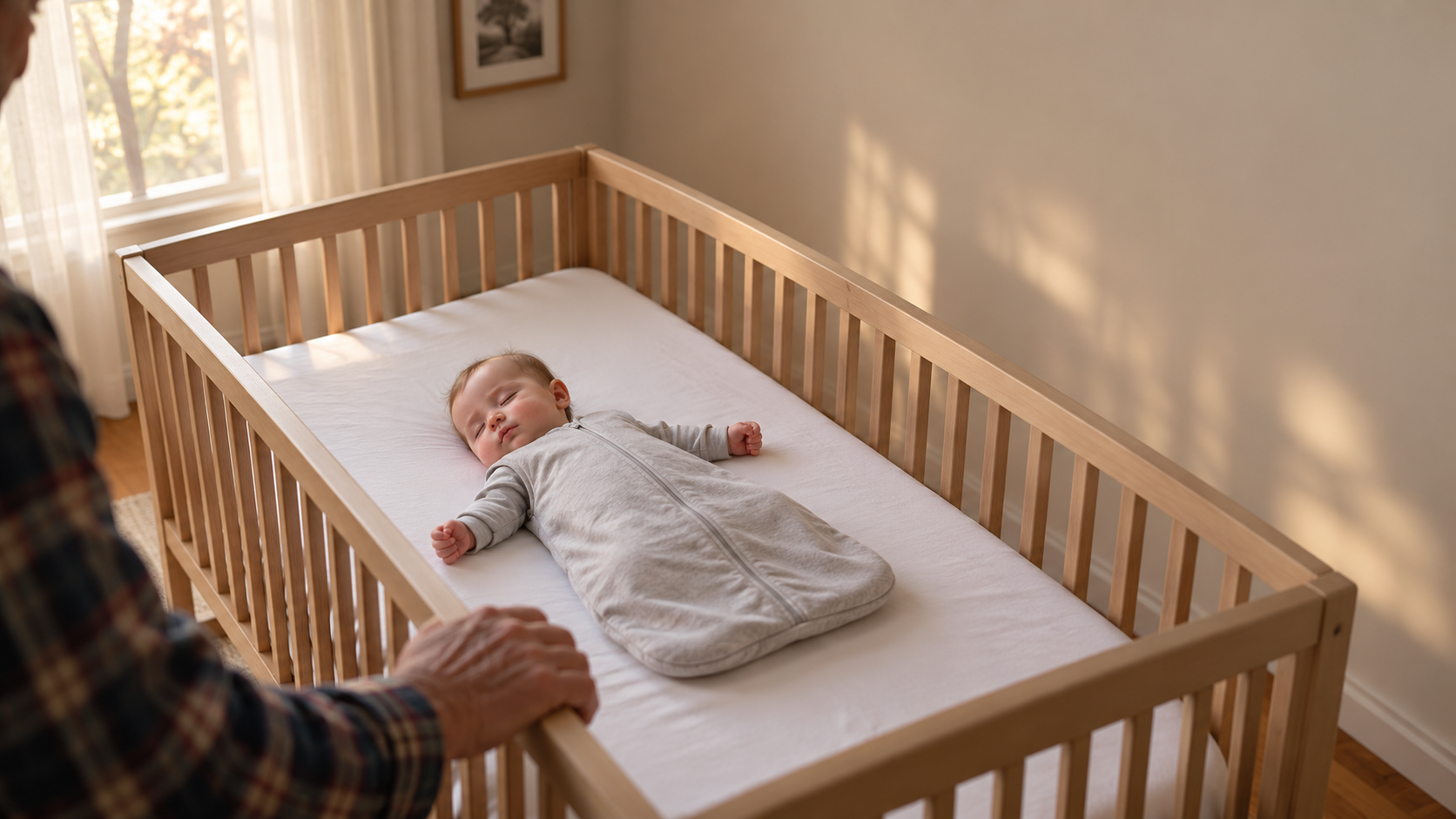
You laid your babies down on their stomachs. The pediatrician told you to. It kept them from choking on spit-up, the thinking went, and they slept longer. Your babies grew up fine.
Now your daughter hands you a printed sheet of rules before she leaves the baby overnight. Back only. Nothing in the crib. No hat. No bumpers. Some of it sounds like fussing.
It is not. Almost everything on that sheet comes from research that did not exist when you were the one up at 2 a.m. Here is what changed, and why.
The Advice Flipped in 1992
For most of the 20th century, stomach sleeping was standard advice. Then researchers noticed that babies who slept on their backs died of sudden infant death syndrome far less often.
In 1992, the American Academy of Pediatrics reversed its position and told parents to put babies down on their backs. Two years later, the National Institutes of Health launched the Back to Sleep campaign.
When that campaign began, fewer than 30 percent of American babies slept on their backs. Within five years, the U.S. SIDS rate had fallen by more than half, according to the NIH. If your children were born before the early 1990s, you never heard any of this. The science arrived after your kids did.
The Choking Worry Is the Big One
The most common reason people hesitate about back sleeping is the fear that a baby will choke on spit-up. It made sense to a generation of parents, and it still feels right to many of us.
The AAP is direct about it: a baby’s airway anatomy and gag reflex keep that from happening.
This belief matters more than it might seem. Researchers at the University of Arkansas for Medical Sciences surveyed 239 grandmothers who cared for an infant grandchild at least once a week. Fewer than half said they put the baby down on its back on a proper sleep surface at their own house. Those who believed back sleeping raised the risk of choking, or that babies sleep better on their stomachs, were far less likely to follow the guidance. The study, in Maternal and Child Health Journal, found babies were more likely to be put down safely at their parents’ house than at Grandma’s.
The Crib Got a Lot Emptier
Remember the bumper pads, the quilt, the little pillow, the bear in the corner? All of it is out now. The AAP says a baby should sleep on a firm, flat mattress with nothing but a fitted sheet.
Some of this is now federal law. A ban on padded crib bumpers and inclined infant sleepers took effect in November 2022, under the Safe Sleep for Babies Act. Inclined sleepers propped a baby at an angle in a soft cradle. The best known of them was recalled in 2019 after dozens of infant deaths; the Consumer Product Safety Commission says roughly 100 deaths have been reported in it all told.
The old drop-side cribs went first. Since June 2011, they cannot be made or sold in the U.S.
So if there is a crib in your attic from when your own kids were small, or a baby seat someone handed down, check it before the grandbaby sleeps in it. The CPSC website will tell you whether it has been recalled.
A Few Rules That Surprise Everyone
The AAP updated its guidance in 2022, and a few points catch people off guard:
- No hat indoors. Overheating raises the risk of SIDS. A baby needs just one more layer than you would wear in the same room.
- Side sleeping counts as stomach sleeping. The AAP says it is just as dangerous.
- Stop swaddling at the first sign of rolling, usually around three to four months. Weighted swaddles and weighted blankets are not safe.
- Car seats and swings are for riding and rocking. The AAP does not recommend them for routine sleep.
- A pacifier at sleep time lowers the risk.
- Once a baby can roll both ways, you do not have to keep flipping them back. Just keep putting them down on their back to start.
- Same room, separate bed, for at least the first six months. A bassinet next to your bed is ideal when the baby stays over.
Why This Lands on You
About 3,400 babies in the U.S. still die suddenly and unexpectedly each year, according to the CDC, and many of the known risk factors are things a caregiver controls. You are often the one watching the baby overnight. That makes you the one who can get this right.
You did nothing wrong with your own children. You did what the best doctors of the day told you. The best doctors of today are saying something different, and the kindest thing you can do for your grandchild is to listen the way you did the first time.