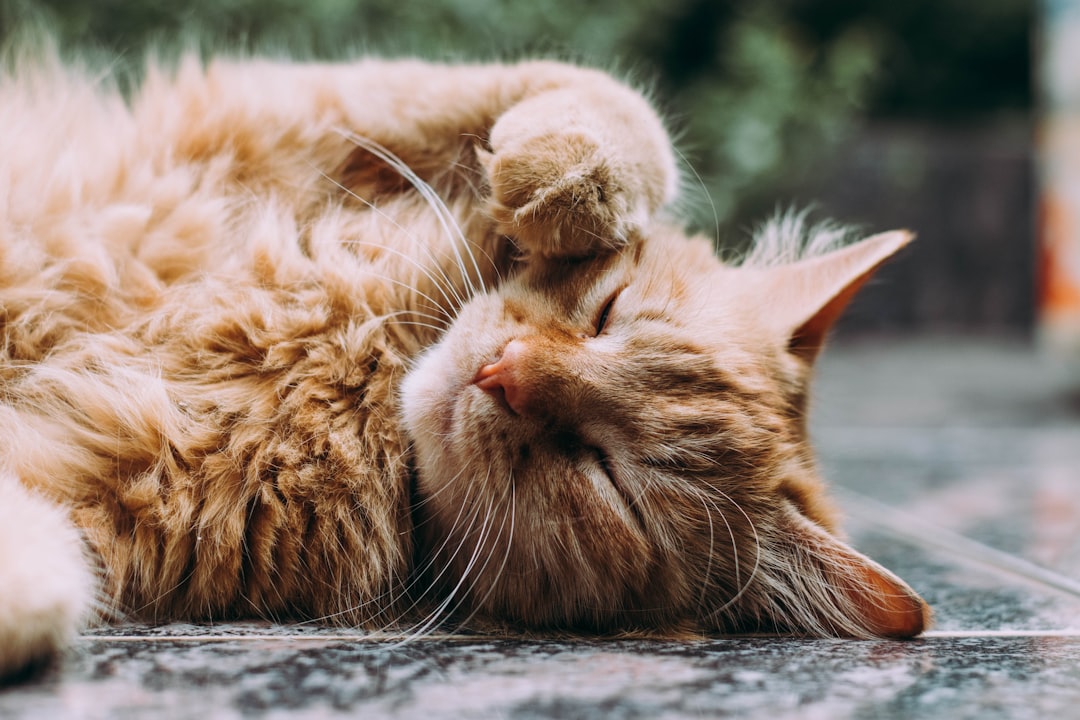
You have probably seen it a hundred times. Your cat climbs into your lap, or settles near you on the couch, and starts pressing those front paws back and forth: slow and steady, like she is working a lump of dough. Cat lovers call it “making biscuits.” Scientists call it kneading.
Either way, it is one of the sweetest things your cat will ever do for you.
It Starts in Kittenhood
Kneading is something cats are born knowing how to do. Newborn kittens press their paws against their mother while nursing. The motion helps stimulate milk flow. At the same time, the kitten purrs, a sound made by rapid vibrations in certain throat muscles. Purring, in this context, is a signal asking for attention.
Together, kneading and purring are a kitten’s way of saying to its mother: stay still, I need you right here. Most young kittens fall asleep in the middle of nursing, perfectly content.
Kittens stop drinking their mother’s milk at around two months old. But the kneading? Many cats never stop.
What Your Adult Cat Is Telling You
When a grown cat kneads, it is a sign of calm and contentment. A cat who is kneading is feeling relaxed and ready to settle down, just like that kitten who used to knead and drift off to sleep.
There may be another layer to it, too. Cats have scent glands between their toes. Some researchers suggest that when a cat kneads a spot, she is also pressing her familiar scent into it, making it feel safe and her own.
Cats Show Affection Quietly
If your cat doesn’t knead, that is okay. Kneading seems to be more common in some cats than others. A cat who skips it might be a little stressed, or might simply show relaxation and affection in a different way.
Cats have lived alongside people for thousands of years, just as dogs have. But dogs were bred over generations for specific behaviors like herding, guarding, companionship. Cats were mostly left to do what they do naturally, valued for their skill at keeping mice away. Only recently have people begun breeding cats, and mostly for looks rather than personality.
The result is that cats tend to be subtler than dogs about saying “I like you.” Kneading is one of those quiet signals, easy to overlook if you don’t know what it means.
Now you do. Next time your cat settles in beside you and starts those slow, steady presses, you can take it for exactly what it is: a little love note, written in paws.