Some songs don’t just play on the radio. They sink into you. They become part of the landscape; cookouts, road trips, living rooms, marches down city streets. These eight songs have done exactly that. Each one tells a different story about what it means to be American.
Some are full of pride. Some carry real pain. Most are a little of both. And every single one of them will likely feel familiar to anyone who grew up in this country.
“This Land Is Your Land” — Woody Guthrie
Woody Guthrie wrote this one out of frustration. He kept hearing Irving Berlin’s “God Bless America” on the radio, but it didn’t say anything about the poverty and inequality he saw all around him, the same hardships he had lived through during the Great Depression.
So he wrote his own tribute. One that honored the beauty of the country while also telling the truth about it. He originally included two extra verses that accused American businesses of corruption and greed, but those were later cut to make the song more accessible.
In more recent years, some artists have brought those verses back. Bruce Springsteen and Pete Seeger performed the full version at Barack Obama’s presidential inauguration.
“Take Me Home, Country Roads” — John Denver
Here’s a fun piece of trivia about this one. Songwriters Bill Danoff and his girlfriend Taffy Nivert came up with it while on a drive, imagining a song that Johnny Cash might record. The original “almost heaven” line was going to end with “Massachusetts” but that didn’t rhyme, so they landed on “West Virginia.” A place neither of them had ever visited.
Later, the two opened for a show John Denver was headlining. He asked if they had anything new. They shared the first verse and chorus of “Country Roads,” and the three of them finished the song overnight. It’s been an American classic ever since.
“Johnny B. Goode” — Chuck Berry
Chuck Berry was born in segregated Missouri in 1926. He started as a blues artist and became one of the first rock and roll stars. “Johnny B. Goode” tells the story of a boy who can’t read or write but can play guitar like nobody’s business, a pure rags-to-riches American dream story that mirrors Berry’s own rise.
The song is considered the first in which an artist celebrates their own success, a tradition that remains a cornerstone of American popular music. It shaped the rock and roll genre and helped pave the way for Elvis Presley and the stars who followed.
It was also included on the Voyager Golden Record, the collection of music placed aboard the Voyager 1 and 2 spacecraft, meant to introduce humanity to any extraterrestrials who might one day find the probes.
“American Pie” — Don McLean
Don McLean released this sprawling track in 1971, and it was inspired by one of the darkest days in music history. On February 3, 1959, musicians Buddy Holly, Ritchie Valens, and J.P. Richardson, Jr. were all killed in a plane crash. McLean used that tragedy as a doorway into something bigger, a meditation on the loss of youthful innocence and the decline of the American dream.
“I didn’t want any simplistic Valentine to the country,” McLean said. “I wanted to have a strange trip, an American trip… somehow insinuate the madness of America and the danger in America and the opportunity in America, all of that.”
Musicologist AJ Kluth called it “an urtext of popular culture”, a nearly nine-minute song that captures teenage hope, Cold War-era paranoia, and the bittersweet passage of time all at once.
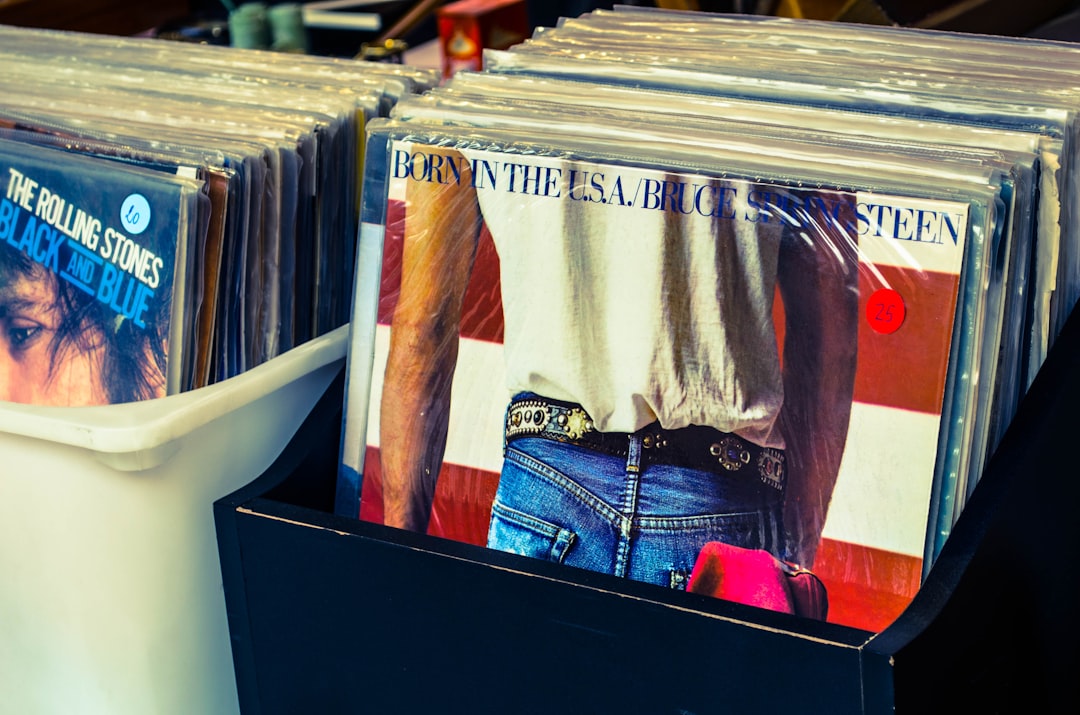
“Born in the U.S.A.” — Bruce Springsteen
That chorus sounds like a celebration. But the song is actually about a Vietnam veteran coming home to find few opportunities and a country that has moved on without him. Springsteen was inspired to write it after performing at a veterans’ benefit concert in 1981.
The song started as a purely mournful piece. The big, booming chorus came later. And most people, Springsteen has admitted, never catch what’s underneath it. “I’m sure that everybody here tonight understood it. If not… my mother thanks you, my father thanks you and my children thank you, because I’ve learned that’s where the money is,” he joked during a 1995 show.
He has occasionally performed the song without the chorus, including at a 2003 concert as the U.S. was preparing to invade Iraq, where he called it a prayer for peace. In 2026, he lent the song to an ACLU ad campaign. “They finally put ‘Born in the U.S.A.’ to some good and righteous use,” he said.
“Sweet Home Alabama” — Lynyrd Skynyrd
This one has a backstory most people don’t know. Lead singer Ronnie Van Zant was actually a big fan of Neil Young. But he felt that Young’s songs “Southern Man” and “Alabama” unfairly blamed the entire American South for slavery and racial injustice. “We thought Neil was shooting all the ducks in order to kill one or two,” Van Zant said.
Gary Rossington, the last surviving original member of the band, confirmed in a 2015 interview that the song was more of a playful dig than a serious attack. “We loved Neil Young and all the music he’s given the world,” he said. “No matter where you’re from, sweet home Alabama or sweet home Florida or sweet home Arkansas, you can relate.”
The song has still sparked plenty of debate over the years, particularly the line “In Birmingham they love the governor”, a reference to segregationist George Wallace. Rossington said the audible booing in that section was meant to signal the band’s disapproval of Wallace’s policies.
“We Shall Overcome”
This song’s roots go back further than most people realize. Historians believe it grew from a mix of different songs and lyrics, some of which were sung by enslaved people in the United States. In 1945, gospel arrangers Atron Twigg and Kenneth Morris compiled an early version. That same year, a factory worker named Lucille Simmons began regularly singing it during a labor strike against American Tobacco in Charleston, South Carolina, changing the lyric from “I will overcome” to “we will overcome.”
The song spread through labor circles and eventually reached Pete Seeger and Joan Baez, who helped bring it to a wider audience. It became the anthem of the civil rights movement. In 1965, President Lyndon B. Johnson quoted it directly in his speech urging Congress to pass the Voting Rights Act.
“Somewhere Over the Rainbow” — Judy Garland
When The Wizard of Oz came out in 1939, nobody could have predicted that one song from it would come to represent something so much bigger than a movie. Dorothy’s dream of a better life, sung from a Kansas farm, somehow captured the entire idea of the American dream in a few verses and a soaring melody.
Judy Garland herself called the song “symbolic of everyone’s dreams.” And she wasn’t wrong. Sometimes those dreams come true. Sometimes they don’t. But this country has always been built on the hope that they might, and that hope has produced some extraordinary music along the way.