Anthony Bourdain spent up to 250 days a year on the road. He ate with presidents and with strangers. He sat on plastic stools and in grand dining rooms. And everywhere he went, he was looking for the same thing: the true character of a place, served up on a plate.
Some destinations grabbed him and never let go. He returned to them again and again, for episodes of Anthony Bourdain: No Reservations and Parts Unknown. Here are seven of the places that meant the most to him.
Hanoi, Vietnam
One of the most famous images from Bourdain’s career is a simple one. He and then-President Barack Obama, perched on plastic stools, sharing a $6 bowl of bún chả at a Hanoi restaurant called Bún Chả Hương Liên. It was very much on purpose. That was the kind of meal Bourdain believed in.
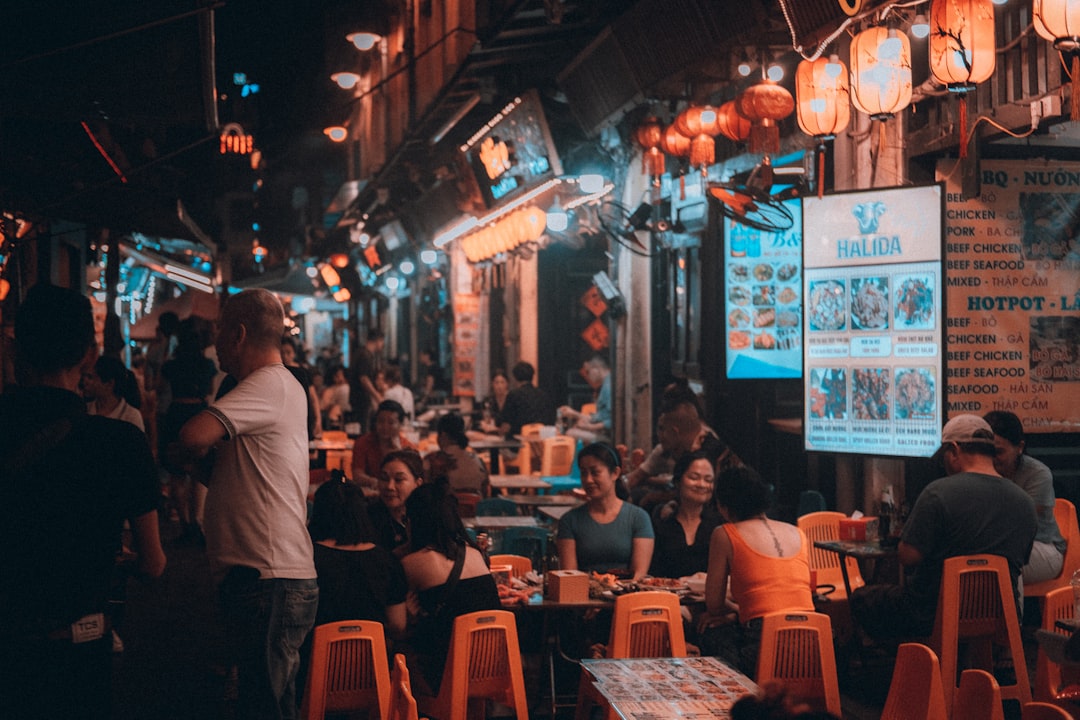
Hanoi is Vietnam’s capital, known for its French, Chinese, and Vietnamese architecture and a street food scene that is among the best in the world. Bourdain filmed eight episodes in Vietnam across his television career.
He was honest about what the country meant to him. “Vietnam: it grabs you and doesn’t let you go,” he said. “Once you love it, you love it forever. I’ve been coming here since 2000 … and it’s held a special place in my heart and my imagination since. I keep coming back; I have to.”
He told Condé Nast Traveler that his first visit was life-changing. “The food, culture, landscape and smell; they’re all inseparable. It just seemed like another planet; a delicious one that sort of sucked me in and never let go.”
Tokyo, Japan
If Bourdain had a single favorite city in the world, Tokyo may well have been it. He told National Geographic that if one city “had it all,” that was the one.
“I mean, if I had to die mid-meal anywhere, it would be Tokyo,” he said. When asked where he would want that last meal to be, he named Sukiyabashi Jiro, a 10-counter restaurant in the basement of a building in the Ginza neighborhood, run by master chef Jiro Ono.
Bourdain described Tokyo as “the most amazing food city in the world, with a nearly unimaginable variety of places stacked one on top of the other, tucked away on every level on densely packed streets.” He also reflected on its complexity in Parts Unknown, touching on the culture of overwork and loneliness alongside the city’s extraordinary food and nightlife.
“The first time I came here, it was a transformative experience,” he said. “What do I do now? I see the whole world in a different way.”
Granada, Spain
Bourdain had strong feelings about Spain. “Any reasonable, sentient person who looks at Spain, comes to Spain, eats in Spain, drinks in Spain, they’re going to fall in love,” he once said. “Otherwise, there’s something deeply wrong with you.”
Of all the Spanish cities, Granada held a special place for him. Tucked into the Andalusian region amid the Sierra Nevada mountains, Granada is one of Spain’s oldest cities. It is home to the Alhambra, a vast palace and fortress known for its Islamic art and gardens.
“Granada is one of the oldest, most complex, magically surreal places in Spain, and one of the most beautiful,” he said on Parts Unknown. He described it as the kind of place where the dream is simply to live, “work in the morning, have a one-hour nap in the afternoon and go out at night. Go out and see your friends, eat tapas, drink red wine, and be in a beautiful place.”
Bourdain also had a deep appreciation for Barcelona, calling it hard to beat “as a hub” for food. Barcelona is known for its Antoni Gaudí landmarks, its museums, and its culinary scene.
Rome, Italy
Bourdain loved Rome. During the season eight finale of Parts Unknown, he sat down to a solo meal of artichokes and prosciutto at Osteria dal 1931 and said, “I love this place. I want to die here already, and I might yet.”
For him, Rome was “where you find the most extraordinary pleasures in the most ordinary things.” The city needs little introduction: the Colosseum, Vatican City, and the Trevi Fountain draw visitors from around the world. So does the food, from cacio e pepe pasta to thin-crust scrocchiarella pizza.
Paris, France
France ran in Bourdain’s blood. His father’s parents were French, and his love of food first came alive during a family trip to the country. Two moments stood out: tasting cold vichyssoise on the transatlantic boat ride over, and then eating a raw oyster on a French beach, offered to him by a local fisherman. That oyster, he said, sparked his lifelong love of adventurous eating.
Paris held a particular pull for him. He often advised visitors to resist the urge to rush from sight to sight. Instead, he said, “stop, find someplace inviting, and slip comfortably into the Parisian pace of life.”
New York City, USA
New York was not exactly a travel destination for Bourdain. It was home, or as close to home as a man who spent 250 days a year traveling could have. He kept coming back to it the way you come back to something that is part of you.
His favorite NYC foods ranged widely: yakitori (Japanese chicken skewers), the deli classics at Katz’s Delicatessen and Russ & Daughters, local Italian spots in Sheepshead Bay, and hot dogs from Papaya King. He loved the city’s gritty energy and often pushed back against gentrification. He called the Upper East Side a “wasteland for food” and described the Bronx as “magical.”
He also named a ramshackle Midtown bar called Siberia as his “favorite bar on Earth.” He described it as a place where you might find “rock-and-rollers, off-duty cops, drunken journos, cast and crew from Saturday Night Live, slumming fashionistas, post-work chefs, kinky politicos, out-of-work bone breakers, or nodding strippers.” He called it heaven.
Beirut, Lebanon
Bourdain filmed three television episodes in Beirut. The first came in 2006, during the Israel-Hezbollah war, while the U.S. was bombing the country. It changed him.
“Our Beirut experience did not give me delusions of being a journalist,” he said. “I just saw that there were realities beyond what was on my plate, and those realities almost inevitably informed what was, or was not, for dinner. To ignore them had come to seem monstrous.”
He had fallen hard for the city before the war disrupted that first visit. “As soon as we’d landed, headed into town, there was a reaction I can only describe as pheromonic: The place just smelled good. Like a place we were going to love,” he wrote, praising its “lovely people” and “fantastic food” while never looking away from its scars.
“It’s a beautiful city, with layers of scars the locals have ceased to even notice,” he said. “It defies logic. It defies expectations. It is amazing.”
He returned for a 2010 episode and again for a Parts Unknown episode in 2015. Beirut stayed with him, a place that opened both his mind and his heart and, by his own account, altered the direction of his entire career.