A great European trip does not have to mean collapsing into bed every night wondering why your feet have declared war on you. For travelers over 60, the best cities in Europe are not necessarily the most famous ones, they are the ones that let you see plenty without turning sightseeing into a marathon.
We looked at what travel advisors actually recommend for their older clients, and six cities kept coming up. Each one offers a lot to see, manageable distances, and a good chair nearby when you need it.
What Makes a City Easy to Explore After 60?
Lucia Ruggieri-Maynard, travel advisor and founder of Wander with Lucia, told Parade age alone should not drive the decision. “I have clients in their 60s and beyond who can comfortably walk all day, and others who prefer a much slower pace,” she says.
What she looks for instead: cities where the sights are close together, places to stop and rest are plentiful, and good transportation is nearby when your feet have had enough.
Amy Kilbreath, founder of Port and Passport and a Virtuoso-affiliated luxury travel advisor specializing in 50-plus travelers, puts it simply. “After 60, the most walkable European cities aren’t necessarily the smallest ones,” she says. “They’re the cities that let you slow down without missing out.”
1. Florence, Italy
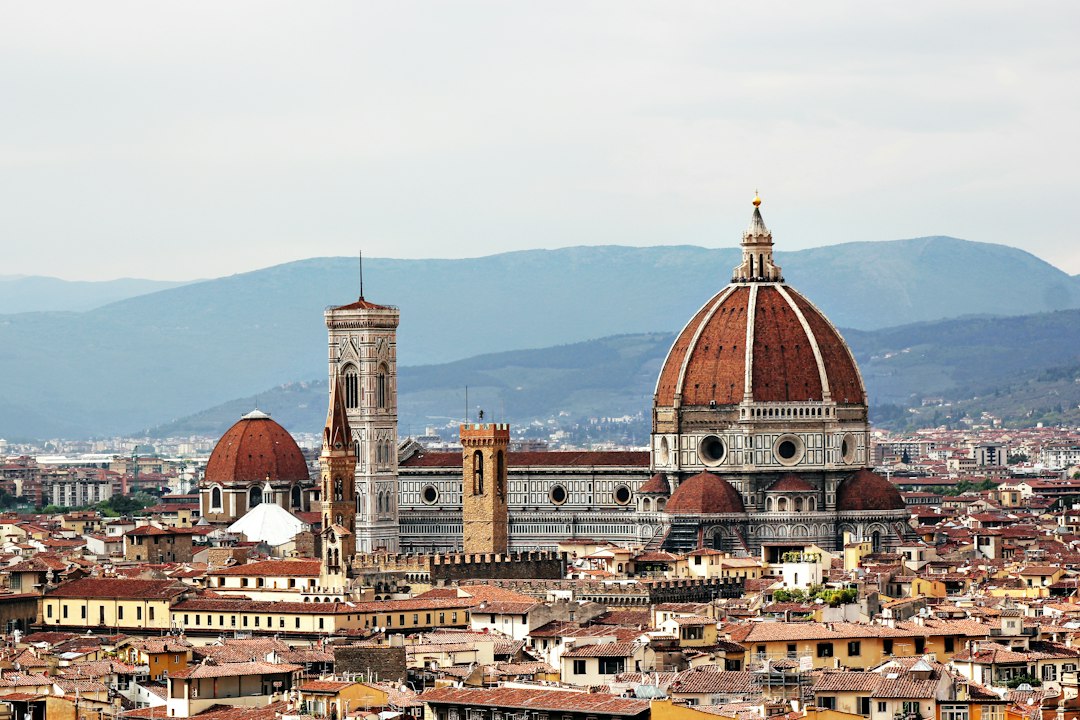
Florence was the clear favorite, praised by four different travel advisors. The reason is simple: you get an enormous amount of Italy packed into a surprisingly small area.
The Duomo, the Uffizi Gallery, Piazza della Signoria, and the Ponte Vecchio are all clustered within the historic center. Derek Cann, travel expert at Going, suggests starting at the Duomo and walking toward Piazza della Signoria, the Uffizi, and Ponte Vecchio, with stops for pasta, espresso, or gelato along the way.
Hilary Altman of WAC Travel highlights the largely flat historic center as a big plus. Ruggieri-Maynard loves how easy it is to break up sightseeing with a long Italian lunch.
One honest note: “Walkable doesn’t mean 100% perfectly smooth,” Kilbreath cautions. Cobblestones and uneven pavement are part of historic Italy, so supportive shoes matter. July and August heat can also make a short walk feel much longer.
2. Barcelona, Spain
Barcelona is a big city, but you do not have to tackle it all at once. Kilbreath recommends exploring it neighborhood by neighborhood. “Each one has a completely different personality,” she says.
Cann suggests starting on Passeig de Gràcia, where you can take in Gaudí landmarks Casa Batlló and La Pedrera before heading toward the Gothic Quarter or stopping at a plaza to rest. Simon Grannville of Nero Line points to the Eixample grid, with its wide, relatively flat sidewalks and frequent benches.
When you have officially walked enough, Barcelona’s public transportation makes it easy to head back without adding more steps.
3. Vienna, Austria
If your ideal afternoon involves a palace, a garden, and a strategic slice of cake, Vienna was made for you.
“So much of what you want to experience is concentrated within a beautiful, manageable historic center,” Ruggieri-Maynard says. She suggests starting around St. Stephen’s Cathedral, wandering toward the Hofburg and through the gardens, with a stop at a Viennese café along the way.
Altman also praises the city’s relatively flat, well-maintained sidewalks and its concentration of museums, palaces, and cafés. And when you are ready to stop walking, Vienna’s trams make it easy to get back to your hotel without any fuss.
4. Amsterdam, Netherlands
Amsterdam rewards a relaxed pace. Cann recommends strolling the canal belt through the Jordaan neighborhood and the Nine Streets, a route that is easy to shorten or extend depending on how you feel. Ruggieri-Maynard loves wandering the canals with café, restaurant, and shopping stops built right in.
When your feet need a real rest, she suggests a canal cruise. “It gives you a chance to continue seeing the city while sitting down and resting your feet,” she says.
A few things to keep in mind: cyclists, bridges, and uneven surfaces all require a bit of attention. And individual attractions can come with their own challenges: the Anne Frank House, for example, has steep stairs.
5. Copenhagen, Denmark
Copenhagen earns its place on this list for one standout reason: it is remarkably flat.
“Copenhagen is very flat, clean and easy to explore at a comfortable pace, especially along the waterfront,” says Julia Shore, president of Reid Travel and a Signature Travel Network member.
Shore recommends starting at colorful Nyhavn, then walking past Amalienborg Palace and Frederik’s Church before continuing toward the Little Mermaid and through Kastellet. The whole route strings together several of the city’s best-known sights without a single hill to climb. Cann also recommends beginning on Strøget, the city’s famous pedestrian shopping street, before heading toward Nyhavn and Amalienborg Palace.
One thing to watch: bikes. Cycling is a major part of daily life in Copenhagen, so Shore advises pedestrians to stay alert around dedicated bike lanes.
6. French Riviera and Provence, France
Southern France offers something for every pace. Lael Kassis, Vice President of Market Innovation and Development at EF Go Ahead Tours, recommends the company’s French Riviera and Provence itinerary, which combines historic towns with guided walks through the region’s coastal and countryside landscapes.
“Walking tours bring them closer to the communities they visit, helping them connect with local people and understand the cultures that shape each destination,” Kassis says.
Highlights range from leisurely strolls through the Camargue wetlands to a more demanding 3.5-mile coastal walk around Cap Ferrat. The variety is the appeal: different paces, different settings, different experiences. Just be aware that some excursions require more stamina than others.
Bonus Pick: Bath, England
For a smaller city that practically begs to be explored on foot, Lucy Clark, Experience Designer at Butterfield and Robinson, recommends Bath. One popular route begins outside the city with a roughly 10-kilometer walk from the village of Ashwicke, following a canal for the final stretch into the heart of UNESCO-listed Bath.
That walk carries a Level 2, or recreational, rating on Butterfield and Robinson’s five-level activity scale, a solid choice for active travelers over 60 who enjoy walking without committing to anything expert-level.
Prefer fewer miles? Head straight into Bath to explore its Roman baths, honey-hued Georgian architecture, restaurants, and cafés at whatever pace suits you.
A Note on the Trickier Destinations
Being over 60 does not put any European city off-limits. “I would never tell someone that a city is ‘too difficult’ simply because they are over 60,” Ruggieri-Maynard says. “I think that does travelers a disservice.”
That said, if hills, stairs, or uneven terrain are a real concern, the advisors suggest planning more carefully for Lisbon, Santorini, Positano, Dubrovnik, and Cinque Terre. Grannville also flags Toledo, Spain, which looks compact on a map but has steep cobblestone lanes. Ruggieri-Maynard notes that Rome’s uneven streets, crowds, distances, and summer heat can make sightseeing more tiring than expected.
The answer is not to skip them. Use transportation strategically, stay close to the sights you most want to see, and, as Kilbreath says, do not measure a great European vacation by your step count.
“See the sights, absolutely. But sit at the café. Have the wine. Watch the people.”
Now that is a travel itinerary worth booking.