
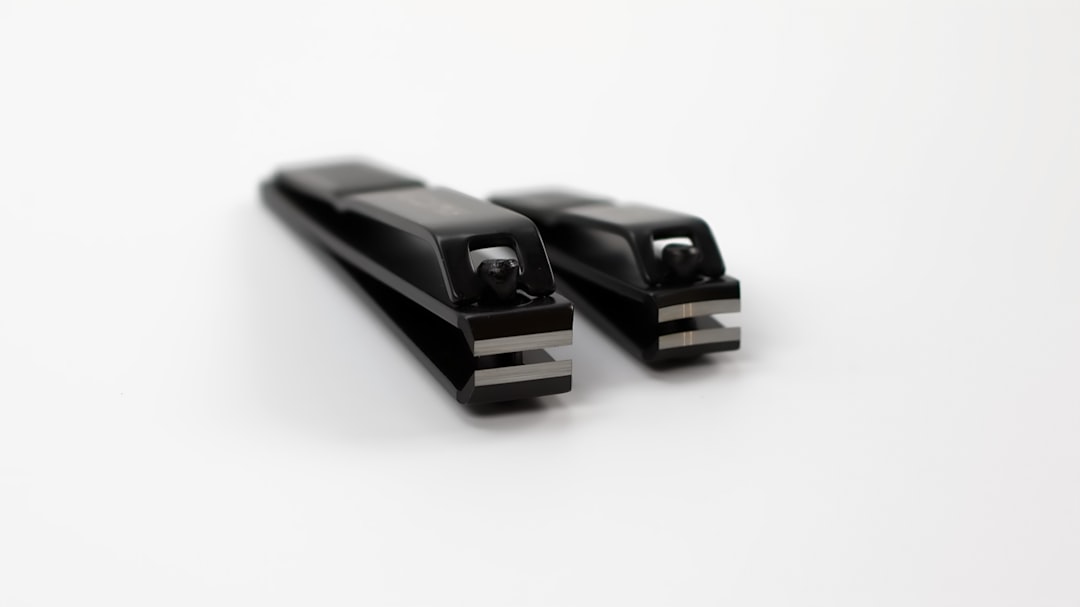
Somewhere in your house right now, there are probably six nail clippers. Maybe eight. You know you have them. You just cannot always find them.
If that sounds familiar, the small hole at the bottom of your nail clipper was designed with you in mind — and it has been there since 1881.
The Answer Is Simpler Than You Think
That little hole is an attachment point. Thread a key ring, a lanyard, or a small clip through it, and your nail clippers stay put. Hang them on a hook inside your bathroom cabinet. Clip them to your toiletry bag so they make it home from the hotel. Some early clippers even came with a small chain already attached for exactly this purpose.
Jake Peters knows this better than just about anyone. He is the founder and CEO of EDJY, a company that has done something no one has done in roughly 145 years: completely redesigned the nail clipper. Peters has traveled the world buying and analyzing clipper designs, owns hundreds of them, and built a team that includes an engineer who previously designed suspension systems for cars.
When Peters set out to reinvent the clipper, the hole was one of the few things he kept. “It’s not a hole, but they have a loop in the patent from 1881,” he says. “You’ll recognize the product. It’s 100% exactly the product at Target today. From 1881.”
A Little History You Might Enjoy
Before the modern nail clipper came along, the standard tool for trimming nails was a small pocket knife. You would hold it perpendicular to your fingertip and peel the nail like an apple. Peters sums up how well that worked: “There’s a reasonable probability that your fingers are bleeding.”
In 1881, two Cincinnati inventors named Eugene Heim and Celestin Matz filed U.S. Patent No. 244,891 for a lever-based finger-nail trimmer. It gave users about 15-to-1 mechanical leverage — no bleeding required. And right there in that original patent, projecting from the end of the lever: a loop for attachment.
Peters points out something interesting about that patent’s language. The cutting surfaces are not called blades. They are called “jaws.” Traditional clippers crush the nail rather than cut it. That is why clippings fly across the room. Peters says a typical nail clipper uses about 175 pounds of force. That is also, he argues, why the design needed a rethink. His EDJY cutters use a single guillotine-style blade instead — the first major redesign of the device in about 145 years.
“The lever on a nail clipper is magical,” Peters said to Reader’s Digest. “Everything below the lever was terrible.”
A Few Bonus Uses for That Hole
Over the years, people have found extra ways to put the hole to work. You can hang your clippers on a hook inside a cabinet so they never get buried again. You can thread one ring through two clippers — one for fingernails and one for toenails — to keep them together as a pair. Nail technicians will notice if you mix them up, by the way.
In many clipper designs, the hole also serves a purpose during manufacturing. It is the insertion point for the pivot pin that holds the lever and base together. So it is not just useful for the owner — it was functional during construction. Peters calls it the belly button of the nail clipper.
As for why the hole has survived on every clipper from a two-dollar drugstore pair to premium Japanese models, Peters has a simple explanation. Features that serve no purpose get cut — they cost material and manufacturing steps. The hole’s persistence proves it still earns its place.
Why So Many of Us Never Knew
Peters has a theory about how nail clippers get passed down through generations. “Every person under the age of 30 got their nail clippers by stealing them from their parents when they left home,” he says. “And the child does not think they’re a thief. Nor does the parent think they’ve been stolen from, but a crime has occurred.”
Five million nail clippers are sold every day, Peters says. Somewhere between 50 billion and 100 billion have been sold overall. And yet most people have never once examined the tool they have used thousands of times.
That changes today. Thread a key ring through that little hole. Hang your clippers somewhere you will actually find them. And the next time a grandchild is headed off to college, maybe check your bathroom cabinet first.