You take care of your home. You fix what breaks, clean what gets dirty, and keep things running. But if you share your space with a dog or cat, that everyday upkeep means something more.
Small maintenance tasks can improve safety, cut down on allergens, and prevent the kind of accidents that happen when a home is not kept up. For your pet, those same tasks can make daily life noticeably more comfortable.
This matters even more as pets get older. When a dog or cat develops mobility challenges, the home they have always known can suddenly feel harder to navigate. Thoughtful upkeep helps them move through it with confidence.
Keeping surfaces clean, clearing hazards, and making sure spaces stay accessible are not complicated tasks. But together, they add up to a home that works better for both of you.
Start with the floors
Hardwood, laminate, and tile are easy to clean and hard to grip. A pet with sore joints has to brace against every step on a slick surface, which wears them out and can lead them to avoid whole rooms. Covering those surfaces with rugs, yoga mats, or floor tiles gives them something to push against, and a non-skid pad underneath keeps the rug itself from sliding. Runners work best along the paths they actually use, from the bed to the water bowl to the door.
Nails play a part too. Overgrown nails change how the toes meet the floor and take away the traction a dog needs on a slippery surface, so a regular trim does more than keep the hardwood scratch-free.
Look at the house from their height
Once a season, get down low and look at a room the way your pet sees it. Loose cords, a gap behind the couch, a pill that rolled under the nightstand.
Storage is the fix for most of it. Bleach, drain cleaner, and detergent kept in low cabinets are worth putting behind a child safety lock, and medications left on a nightstand or low counter are easy for a curious pet to reach. Keep the ASPCA Animal Poison Control number somewhere you can find it in a hurry: (888) 426-4435.
Houseplants deserve a second look as well. Lilies are especially dangerous for cats, and the ASPCA keeps a searchable list of plants that are safe and unsafe for dogs and cats. A bouquet on the counter counts.
Keep the air and the dust under control
Vacuuming, washing pet bedding, and changing furnace and air conditioner filters on schedule all pull hair and dander out of circulation. Your pet breathes that air far closer to the floor than you do. This is one of those jobs where the benefit is shared and nobody has to be convinced it was worth doing.
Check the openings
Screens loosen over time. Latches wear out. Gates sag on their hinges. A pet can slip out an unsecured window screen or fit through a balcony railing, and both are easy to catch during a walk-around. While you are out there, look for new gaps along the bottom of the fence and test the gate latch with one hand.
Shorten the climb
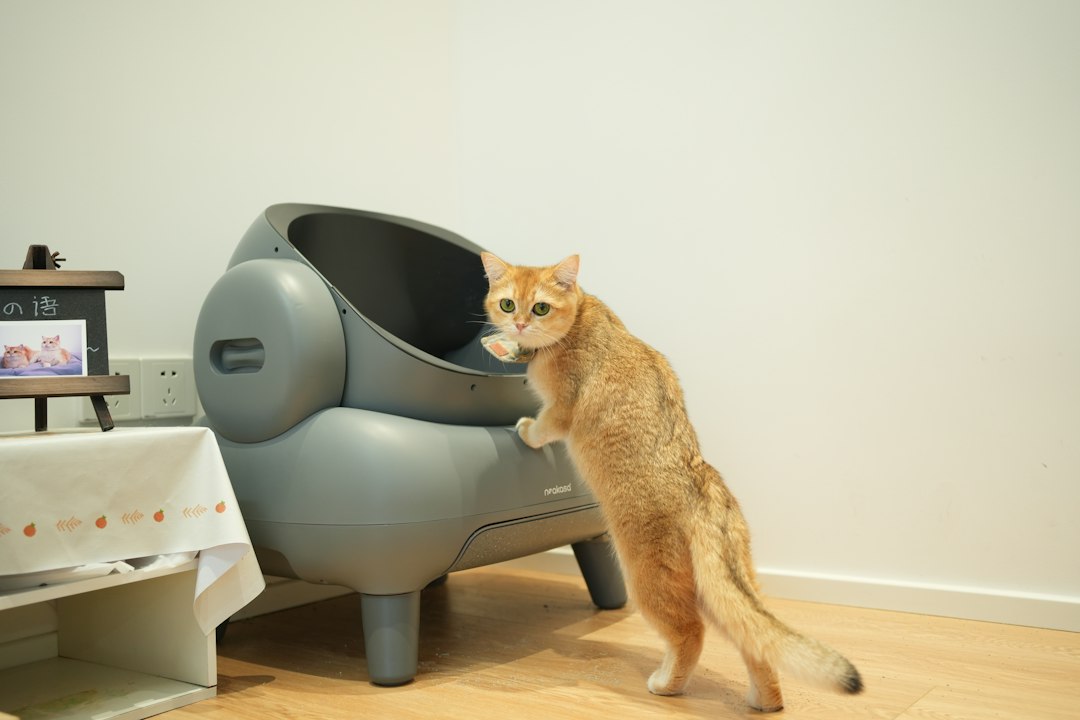
When jumping starts to look like effort, take the jump out of the equation. A ramp or a set of steps to the couch or the bed helps. So do textured treads on indoor stairs, a raised bowl that saves them from reaching down, and a litter box with a lower entry for a cat who has started hesitating at the edge. Introduce changes one at a time. A senior pet often resists helpful changes that all arrive at once.
Light the path
A night light in the hallway and near the water bowl helps a pet with fading eyesight find their way after dark. It happens to help anyone else walking that hallway at two in the morning, which is a fair return on a two-dollar bulb.
Watch for changes in habit
Home upkeep can solve a footing problem. It cannot solve a health problem. Cats in particular hide discomfort well, and the signs show up as changes in routine rather than a limp. A cat who stops jumping to a favorite perch, takes the stairs one at a time, or develops a dull, matted coat over the back and hips is telling you that turning and reaching have started to hurt. That is a call to the vet, not a trip to the hardware store.
A well-maintained home protects your property. But for pet owners, it does something else just as valuable. It keeps the animal you love safe, comfortable, and at home in every sense of the word.