
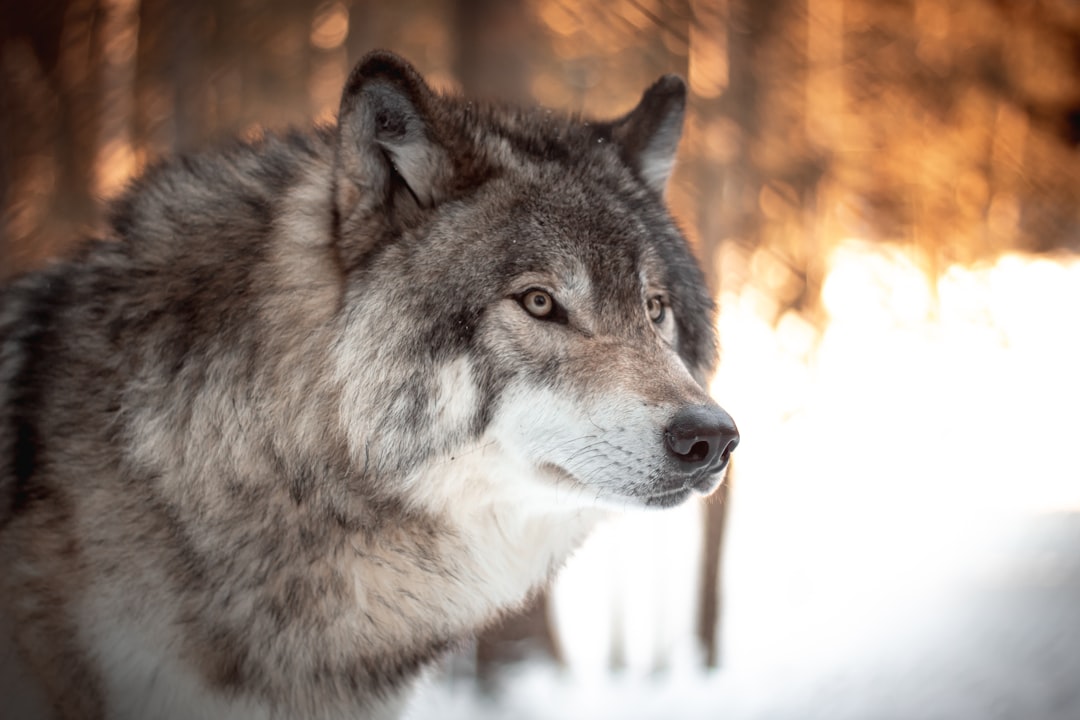
Here is a discovery that makes you stop and think. On a small Swedish island that has never been connected to the mainland, researchers found the remains of two wolves. And those wolves are between 3,000 and 5,000 years old.
The puzzle is this: the island was never reachable by land. So how did two wolves end up there?
Scientists think humans may have brought them there, most likely by boat. The evidence points that way. The wolves had been eating a diet heavy in seals and fish, a marine-heavy menu that closely matched what nearby human communities were eating at the same time.
One of the wolves also showed low genetic diversity. That is a pattern often seen in small, closely connected populations. Together, the clues paint a picture of wolves that may have lived alongside humans far more closely than anyone expected.
They may even have received food from the humans nearby, or traveled with them across the water.
Researchers say there is still more to learn. But the find is already changing the way scientists understand the long, complicated relationship between people and wolves.
It is a good reminder that the bond between humans and animals goes back a very, very long way. Thousands of years before anyone thought to write it down, we may have been sharing our boats and our meals with wolves.
The place itself is worth picturing. The island is called Stora Karlsö, and it sits in the Baltic Sea off the coast of Gotland. It covers about 2.5 square kilometers, which works out to less than a square mile, and it has no native land mammals of its own. The bones turned up in a cave called Stora Förvar, a spot that seal hunters and fishers used heavily during the Neolithic and Bronze Ages. People went there to work the water. And apparently, somebody decided the wolves should come too.
Telling a wolf from an early dog is harder than it sounds. Bone shape alone can mislead, so the team went to the DNA instead. Both animals came back as wolves, with no dog ancestry at all, though they were smaller than the wolves living in Scandinavia today.
One detail lingers longer than the rest. One of the wolves, dated to the Bronze Age, had severe damage to a limb bone. It was the kind of injury that would have made moving and hunting very difficult. And yet the animal lived long enough for that bone to tell the story. Researchers say this points in one of two directions. Either the wolf was cared for, or it was living somewhere that did not require it to run down large prey to eat.
Either way, something was keeping it alive.
The scientists are careful about how far they take this. They cannot say whether these wolves were tame, kept in some form of captivity, or managed in a way we do not have a word for yet. What they can say is that the animals were on that island for a long stretch of time, and that does not happen by accident. One of the senior authors, Pontus Skoglund of the Francis Crick Institute, described it as a provocative case, and said that in certain settings, people may have kept wolves nearby because they “found value in doing so.”
There is a modern echo, too. Wolves along the coasts of Alaska and British Columbia are known to eat a marine diet, so the behavior is not unheard of. What was missing until now was any sign of it happening in prehistoric Scandinavia.
Taken together, the findings suggest that people and wolves worked out a range of arrangements over the centuries, and that some of those arrangements were early experiments that never led to the dogs we know today. Some branches of that story simply ended.
Which makes the whole thing feel less like ancient history and more like something familiar. Somewhere on a windswept rock in the Baltic, thousands of years ago, a person looked at an animal that had every reason to be feared, and decided to feed it anyway. That decision has been repeating itself ever since, in barns and on porches and beside armchairs all over the world.
The dog dozing near your feet is the far end of a very long line.