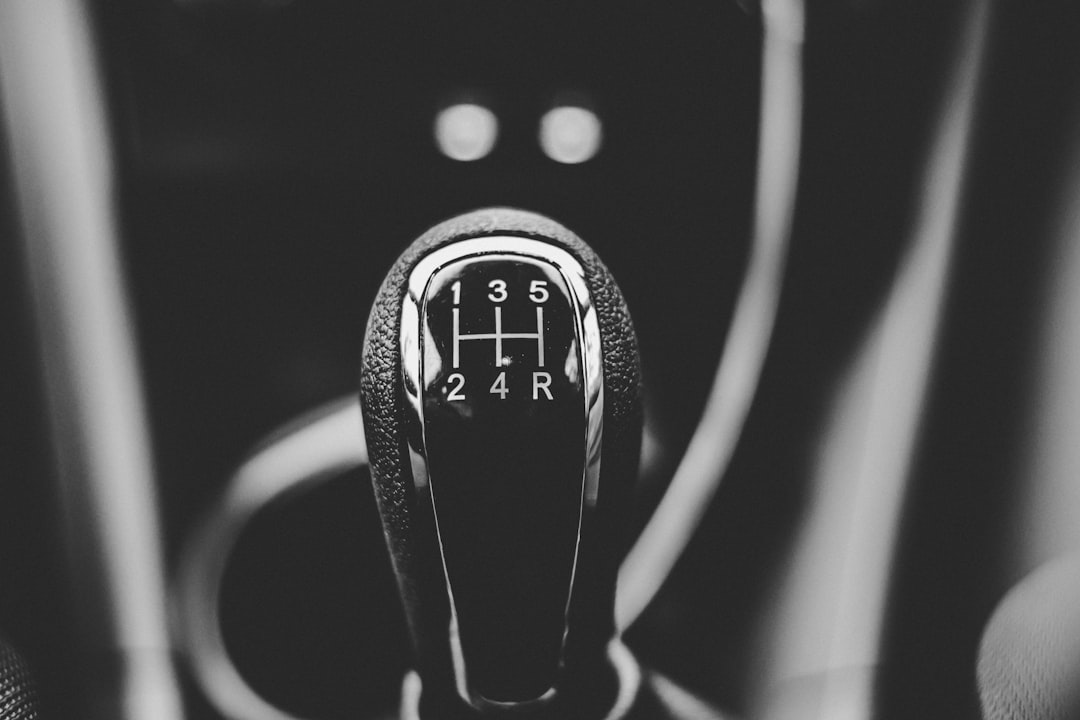
Remember the first time someone handed you the keys to a stick shift? The clutch, the gas, the grinding gears, and then, finally, that moment when it all clicked and you pulled away smoothly. It felt like an achievement.
For our generation, driving a manual was just part of growing up. You learned it the way you learned most things; from a parent, an older relative, or sheer necessity. A new survey from Extreme Terrain found that 55% of baby boomers learned to drive stick because they had to. Only 22% of younger drivers today can say the same.
The gap between generations is striking. Just 9% of boomers never learned to drive a manual. Among Gen Z drivers, that number jumps to 35%. And overall, only 18% of Americans know how to use a stick shift at all.
Part of the reason is simple math. Back in 1980, manuals made up 35% of all vehicles built for the US market. By 2024, less than 2% of cars sold here were stick shifts. Preliminary federal data puts that figure even lower for 2025 model-year vehicles, at just 0.6%.
Driving instructor Andy Nelson, owner of Safe Driver Solutions, has watched this shift play out firsthand. He told the New York Post that people in their mid-40s and up are probably the only ones left who really grew up with the stick shift.
“People now don’t know how to drive it unless their parents or grandparents teach them,” Nelson said.
That tracks with the survey data. More than half of all manual drivers (56%) learned from a parent or older relative. The skill is being passed down, or it is disappearing.
Nelson makes no secret of what he thinks is lost when a driver never learns the manual. He describes it as engagement, a real connection between driver and machine that automatics simply do not require.
“It takes more brainpower. You have to tell your right foot how much gas to give and your left foot how much clutch to pull out. That’s a lot of multitasking,” he said.
Americans still respect that kind of multitasking. In the same survey, 64% of respondents said manual drivers are more skilled than those who only drive automatics, and 51% called them more impressive.
Nelson also notes that driving stick is nearly impossible while looking at a phone, something he sees as a real safety advantage, given how distracted drivers have become.
In inclement weather, he adds, a manual transmission in a rear-wheel-drive vehicle gives the driver more control than an automatic when roads are slick.
He does acknowledge that modern automatics have come a long way. Features like automatic emergency braking, lane-keeping assistance, and blind-spot monitoring are genuine advances.
“Manufacturers have done a pretty good job of making the car smarter than the driver,” Nelson said.
Still, he worries that the decline of the manual reflects something broader, a tendency to simplify away the skills that once required real attention and ability.
“If we keep going the way we’re going, stick shifts are going to die out with my generation,” he said.
The rest of the world has not given up on it yet. Roughly half of all cars sold in Europe are still manuals. In Italy, only 28% of 2020 car sales were automatics. In many EU countries, an automatic is considered an upscale option that costs more. And around 75% of cars on the road in China are manual, with stick sales also outpacing automatics in India, Argentina, and Brazil.
For now, the most common reason Nelson’s students want to learn stick? So their kid can drive something fancy to prom. That accounts for about 95% of his manual-transmission students, he says. The rest live or work on farms and need the skill for a semi-trailer truck.
As for driving safely regardless of transmission, Nelson keeps it simple: “Drive slower, drive safer, pay attention. All it takes is one hit to change your life forever.”
Not bad advice for any of us, stick or no stick.