8 Vegetables to Plant in November for a Spring Harvest: A Deeper Look at Getting Each One Right
October 17, 2026 — 65Nation
Picture the garden in late October. The tomato cages are stacked in the shed, the hose is drained, and the beds are raked flat. It looks finished for the year.
Three gardening experts told Parade it is anything but, and our readers agreed. Our story on the eight vegetables that do better when planted in November was the most-read piece we published this week. So we went back, this time to the university extension services American gardeners have trusted for generations, to answer the questions that come next. How do I know what my winter will do? What counts as a first frost? And once a clove or a crown is in the ground, what gives it the best chance?
Two Numbers Worth Knowing Before You Dig
The original story made one point that deserves a second look: where you live decides almost everything. Christina Stembel, founder of Farmgirl Flowers, gave Southern gardeners a long November list and Northern gardeners a short one. You can find out which list is yours in about a minute.
The first number is your hardiness zone. The USDA Plant Hardiness Zone Map is the standard gardeners use to judge which plants are likely to survive the winter where they live. It is built on the average coldest temperature of the year, shown in 10-degree zones and 5-degree half zones. The map was updated in late 2023, the first refresh since 2012, and the USDA’s website lets you find your zone by typing in your ZIP code. About half the country landed in a slightly warmer zone than before. If you last checked years ago, check again; a move from 6b to 7a changes what you can get away with in November.
The second number is your first fall frost date. The Old Farmer’s Almanac has a free calculator that takes your ZIP code and returns the average first fall frost for the nearest weather station, drawn from NOAA climate records. The Almanac adds a caveat worth repeating: frost dates are historical estimates and come with no guarantee. Treat yours as a planning date, then watch the ten-day forecast.
If you would rather ask a person, your state’s Cooperative Extension Service has county offices and Master Gardener volunteers, and ask.extension.org takes questions any time, day or night.
Why a Cold Head Start Helps
Stembel’s logic was simple: vegetables that produce in spring do best when they spend the winter getting their roots established, then take off when the days lengthen. Brandy Hall of Shades of Green Permaculture added that early November brings cooler temperatures, steady soil moisture and fewer pests.
Garlic is the clearest case. The University of Vermont Extension points out that garlic needs a dormant period of about two months below 40 degrees, which is exactly why it goes in the ground in fall. Melissa Keyser of Cultivating Wild, gardening in Maine, made the same point: early November soil is still warm enough for roots, but the days are too short to push up sprouts that would waste the plant’s energy.
The Eight, With the Details That Matter
1. Fava Beans
Stembel called favas a dark horse for zones 7 through 10, and a USDA fact sheet explains why they shrug off weather that would kill an ordinary bean. Prepared with Iowa State University Extension, it lists fava beans as cold tolerant down to about 15 degrees and rates them a “very good” nitrogen fixer, with a strong taproot that helps break up compacted soil. One warning from the same sheet: favas do not grow well in heavy soils, so Hall’s well-draining, full-sun bed matters. Leave the roots in place after harvest, as Hall suggests, and next summer’s crop gets the benefit. Stembel’s reminder stands too: they get leggy as the days lengthen, so plan to stake them in early spring.
2. Peas
Stembel warned that peas resent early spring planting. Here is the other half of the picture. A University of Vermont research team, writing for the Maine Organic Farmers and Gardeners Association, found that peas need a well-established root system to survive the winter, so planting too late in fall does not lead to success. Their overwintering plantings went in at the end of September in zone 5a near Burlington.
The lesson for the North is that November peas are a long shot. Put them on the calendar for next September instead, or go with a very early spring sowing. In zones with mild winters, Stembel’s advice holds: choose overwintering snap, snow or shelling varieties, and set the trellis the day you plant so the roots are never disturbed.
3. Onions
This is the one that deserves plain talk. Stembel’s point was that overwintered short-day onions can grow a much bigger bulb than spring-planted ones. Dixondale Farms, a Texas grower that specializes in onion plants, is candid that fall planting is “by no means guaranteed.” An onion starts forming its bulb when the days reach a certain length, whatever size the plant is. Planting in fall, when days are short, lets the plant build leaves and roots first. The two risks are that a young plant may not survive a frigid winter, and that a plant that does survive may flower in spring, which means a smaller bulb that stores poorly. Succeed, though, and you will end up with extra-large onions.
Short-day varieties begin bulbing once days reach 10 to 12 hours, which is why they belong in Southern latitudes. If that is you, go ahead. North of that, treat overwintered onions as an experiment in a spare corner, and plant your main crop in spring from storage varieties, which Dixondale calls the safest path to a year of homegrown onions.
4. Garlic
All three experts agreed on garlic. Two things the original did not cover: which kind, and which cloves.
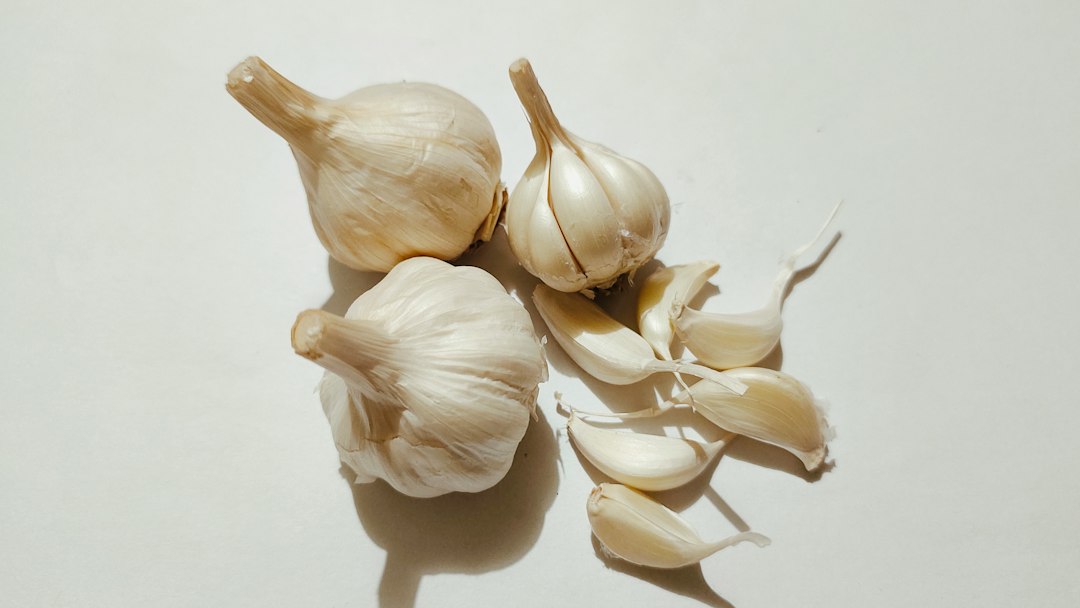
There are two basic types. Hardneck garlic, the better choice for cold climates, produces five to eight large cloves and sends up a curly flower stalk called a scape in early summer; the scape is edible too. Softneck garlic has 12 or more smaller cloves and no scape, and it stores for six months or longer. It is the kind you can braid.
Whichever you pick, plant the largest cloves from the biggest bulbs and save the small ones for cooking. Skip grocery-store garlic, as the Vermont extension advises, and buy seed garlic from a nursery or catalog. Leave the papery skin on, set each clove point up, and cover it with two to three inches of soil. Then mulch. Iowa State University Extension recommends a four- to six-inch layer of weed-free mulch over fall plantings, so the soil cools gradually in fall and warms gradually in spring. Shredded leaves or straw work well. The green tips tend to show up around the time the daffodils do; when they appear, pull the mulch gently back from the leaves.
5. Rhubarb
The original noted that November, around your first frost, is a workable window for planting rhubarb crowns. Montana State University Extension agrees. You can grow rhubarb from seed, but crowns are easy and productive sooner, and you can plant them in fall once the plant has gone dormant. If you cannot count on snow cover, mulch fall-set crowns to keep them from heaving out of the ground, and use no fertilizer in the planting year.
Purdue Extension’s spacing guidance is worth copying onto an index card. Choose crowns with at least two large buds. Set them about 2 inches below the surface and 3 feet apart, in full sun, along the edge of the garden where they can stay put. Then be patient: harvest nothing the first year, let every leaf grow for two years to build the crown, and from then on pull stalks for eight to ten weeks each spring. Plants need dividing only every 8 to 10 years. One reminder from Oregon State University Extension: only the stalks are edible. Rhubarb leaves are toxic.
6. Spinach
Spinach is the crop on this list that gardeners in cold country can still plant in November, if they are willing to tuck it in. Ohio State University Extension reports that spinach can be grown through winter under row cover with inexpensive equipment and a little planning. Lay the row cover on right after planting. When a cold spell is in the forecast, add a second frost blanket. Lift the cover to pick only when the temperature has climbed into the 40s, and put it back with enough daylight left for the air underneath to warm again before night.
Johnny’s Selected Seeds, the Maine seed company, notes that spinach planted in late fall and reaching about an inch tall by the winter solstice is likely to give harvestable leaves by February. Stembel’s variety advice still holds: cold-tolerant savoy or semi-savoy types, set about 6 inches apart for airflow.
7. Shallots
Hall said shallots behave like garlic, and the extension offices agree. Colorado State University Extension suggests planting sets four to six weeks before a hard frost with the tip almost at the soil surface, covering them with soil, then mulching with leaves or straw. If they sprout in fall, no need to worry; they should still come through the winter. Buy planting shallots from a garden center or catalog; grocery-store bulbs may have been treated to keep them from sprouting.
Virginia Tech Extension adds that shallots like rich, loose soil with plenty of compost worked in, and that sets sold in clumps should be separated into single bulbs before planting. Space them about 6 inches apart. Drainage matters most of all. Shallots rot in soil that stays wet.
8. Radishes
Radishes were the quick win in the original, and still are. Keyser says some varieties are ready in about a month and do not mind the cold. The one thing worth adding comes from a Texas A&M AgriLife Extension November checklist: watch the forecast for freeze warnings, and on the first cold night, cover tender rows with row cover, an old bedsheet, or even a cardboard box. That trick works for young spinach and favas too. And as Keyser noted, radish greens are as edible as the roots, so a sudden cold snap rarely leaves you with nothing to pick.
Make the Job Lighter
A few practical suggestions from our side of the page.
Buy starts where you can. Stembel’s tip bears repeating: in November, already-established plants set in your sunniest, best-draining spot have the best odds of settling in before winter.
Pick a mild afternoon and one bed. None of this needs a whole Saturday. The Vermont extension guide plants garlic cloves 4 inches apart in rows 8 inches apart, so a dozen heads of next summer’s garlic take up less ground than a doormat.
Mark the rows. Everything here disappears under mulch for months; a stake and a label at each end saves guessing in March.
Consider a raised bed. The Vermont guide suggests raised beds where drainage is poor, because too much moisture rots garlic. A raised bed sheds water, warms sooner in spring, and brings the work up to a more comfortable height.
Water once. Water after planting to settle the soil around cloves and crowns, then let the season take over.
One Last Trip Before the Freeze
The original ended with a suggestion that holds up, so we will repeat it. Before the first hard freeze arrives, it might be worth one last trip to the garden. Check your zone, check your frost date, and pick the two or three crops on this list that suit your winter. A little work now could mean fresh garlic, sweet peas, and tender spinach waiting for you come spring. And rhubarb, if you are willing to wait a little longer.