If you have ever driven a country road at dusk, you know the moment. A pair of eyes flashes at the edge of your headlights. Your foot is on the brake before you have finished the thought.
Along one stretch of Interstate 25 in Colorado, the animals now have a better option than the pavement. They can take the bridge.
It is called the Greenland Wildlife Overpass, and it opened last December between Larkspur and Monument in Douglas County, between Denver and Colorado Springs. The Colorado Department of Transportation (CDOT) says it is the largest wildlife overpass in North America. A California crossing is expected to take that title when it opens this winter.
The bridge spans six lanes of traffic and measures 200 feet wide and 209 feet long. More than 100,000 vehicles pass beneath it every day, according to Axios. It cost $15 million to build.
The big question was simple. Would the animals actually use it?
Who Is Crossing?
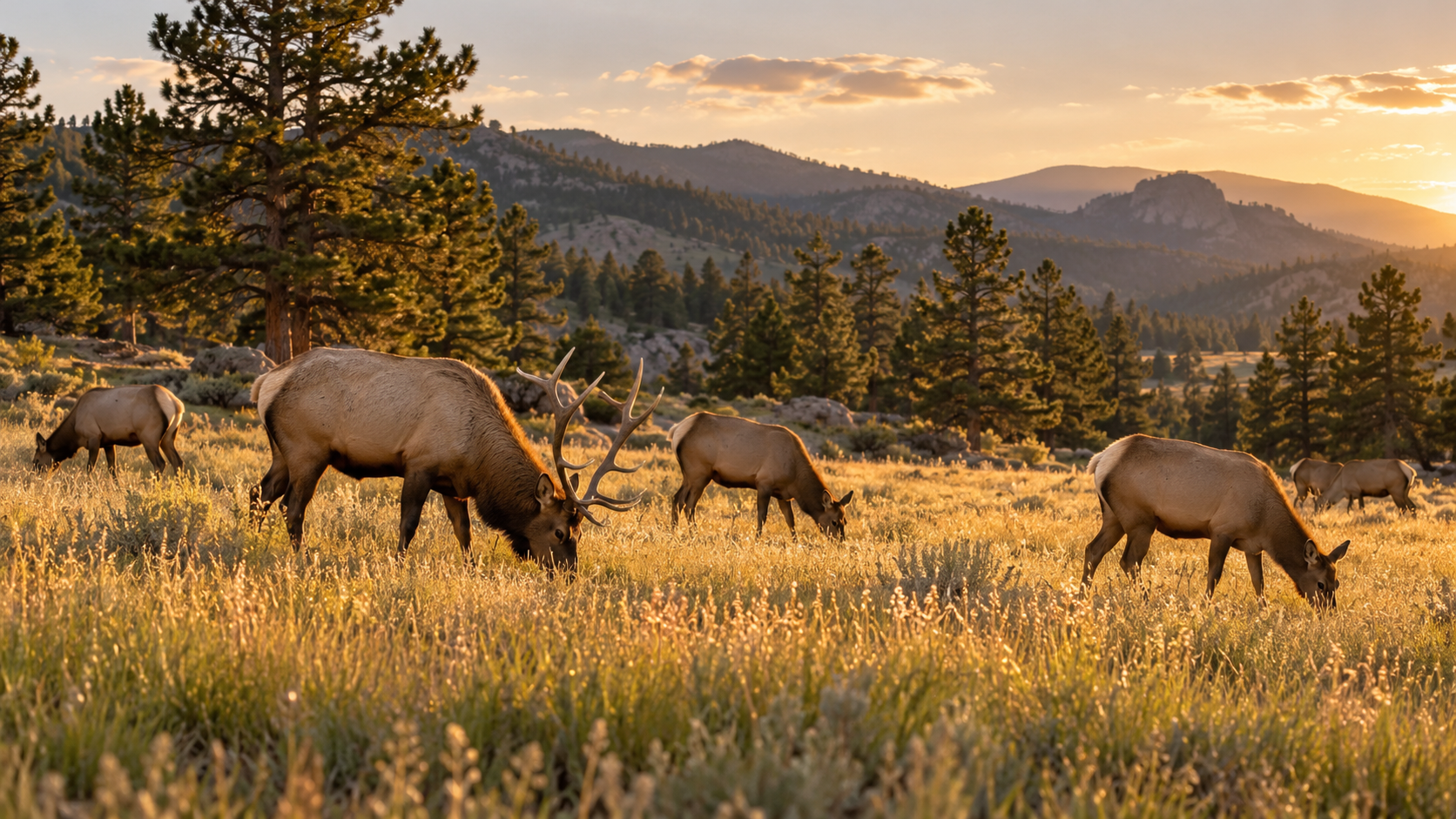
The first elk appeared on the overpass cameras in June, according to CDOT officials. Pronghorn are crossing too, along with mule deer, black bears and mountain lions. CBS News Colorado reported coyotes using it as well.
Chuck Attardo, an environmental manager with CDOT, described the camera footage to CBS News Colorado.
“We’re seeing elk herds cross the bridge. We’re seeing pronghorn for the first time in decades cross over to the west side of I-25 because of the bridge,” Attardo said.
That matters because elk and pronghorn are choosy travelers. Both tend to shy away from underpasses. “Elk and pronghorn like these big open structures where they can see for miles in each direction,” Attardo said.
For pronghorn, the wait was a long one. Researchers who tracked collared pronghorn watched them move north along I-25, searching for a place to cross. Eventually, the animals turned back.
The bridge was built with smaller travelers in mind, too. Grass is being grown on top to mimic open grassland, and a low line of brush runs along it. Wildlife biologists also piled wood into a path so small animals have cover from coyotes, foxes and hawks on the way across.
“We’re not just focused on the big game species, but also on the smaller,” said Brandon Marette, a wildlife biologist with Colorado Parks and Wildlife. He named a few of those smaller neighbors: the Preble’s meadow jumping mouse, which is federally threatened, and the northern leopard frog.
Not everything has gone to plan. This year’s drought slowed the grass, so CDOT intends to bring in new topsoil next year and try again.
Is the Road Any Safer?
The overpass was the final piece of a larger system. Before it opened, CDOT had already built five wildlife underpasses and 14 miles of fencing on each side of the highway to steer animals toward them.
Before those crossings, wildlife crashes were the third most common type of crash on this section of I-25, according to a CDOT-commissioned study reported by Colorado Politics. The study looked at 2022 through 2024, after most of the underpasses and fencing were finished. Wildlife crashes fell by about 85 percent a year on average, and by 91 percent in the final year. Overall crashes dropped 20 percent, likely helped by other roadway changes too.
Those gains came before the overpass opened. Data on the overpass itself is still being collected. Julia Kintsch, principal investigator on a study of how well the overpass works, said the elk and pronghorn on camera are a good early indicator.
“That is a really promising sign,” she said.
Attardo put the practical case plainly. “They pay for themselves in about 15 years because of all those accidents that they prevent, and so why wouldn’t you do more of these?”
The Long Game
Since I-25 was built in the 1950s, it has stood between the open eastern plains and the foothills of the Pike-San Isabel National Forest. Elk herds on either side were largely cut off from each other, which limited their breeding options.
Now researchers want to know whether the bridge brings those herds back together. They have collected elk droppings on both sides of the highway to record a genetic baseline. (Science is not always glamorous.) The first results are expected in spring 2027, and the team plans to compare again in five to 10 years.
“Over time, this connectivity could support greater genetic diversity within those populations,” said Maddie Garbalagtys, a CDOT spokesperson.
The next time your headlights catch a pair of eyes at dusk, picture that grassy bridge over I-25. The full answer on the elk will take five to 10 years, and the people behind it are willing to wait. Anyone who has planted a tree for the grandchildren knows that kind of patience.