
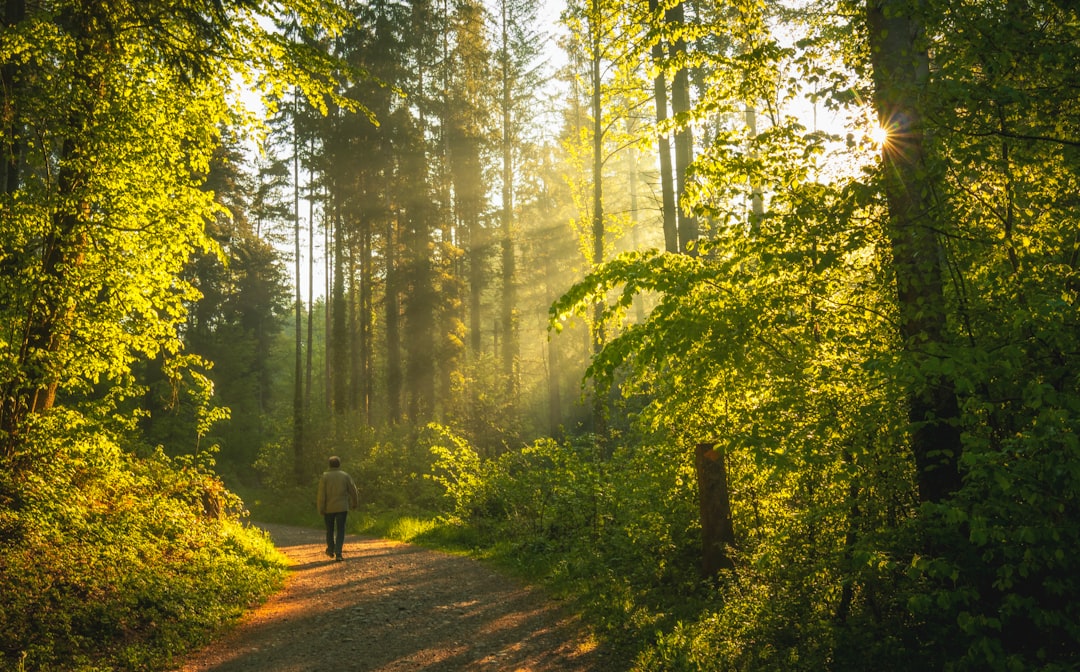
You do not need a gym membership. You do not need special equipment. You might just need a nearby patch of trees.
It is called shinrin-yoku, a Japanese term that translates to “forest bathing.” Japan first developed it in the 1980s as a form of preventative health care. The idea is simple: spend intentional time in a wooded setting, taking in the sights, sounds, and smells around you. No hiking required. No destination needed.
Scientists have been studying it ever since. And what they have found is worth knowing about, especially for our generation. Here are four real benefits that research has linked to time spent among trees.
It Brings Your Stress Down
You have probably felt it yourself, something settles in you when you step outside and the noise fades. Research backs that feeling up. A 2007 study found that time spent in natural forest settings was associated with lower cortisol levels, the body’s primary stress hormone.
Forest bathing takes that a step further. It asks you to slow down and pay close attention to what is around you, rustling leaves, birdsong, the quality of the light. Studies comparing walks in cities versus walks in wooded areas consistently show greater reductions in stress markers among people who walked in nature. Researchers point to less noise, softer light, and the calming effect of the natural environment.
It Helps You Sleep Better
Here is something useful for anyone who has been staring at the ceiling at 2 a.m. Spending time among trees during the day can help regulate your body’s internal clock, what doctors call your circadian rhythm. That makes it easier to fall asleep and stay asleep.
Time outdoors also increases oxygen flow and lowers stress, both of which are associated with deeper sleep. A 2025 study found that forest bathing was linked to more restorative sleep and fewer insomnia symptoms, especially in the short term after time spent in natural settings. The takeaway is straightforward: getting outside during the day may pay off at night.
It Clears Your Head

After a long morning of emails, news, and screens, your brain gets tired. Research suggests that time in a forest setting can help restore attention and reduce that kind of mental fatigue.
This is explained by Attention Restoration Theory, which holds that the brain recovers from mental exhaustion more easily in natural environments than in busy urban environments. The forest is less demanding on your attention, so your mind gets a chance to reset. One study even found that children with ADHD exhibited fewer symptoms of inattention after spending time in green spaces than in urban environments.
It Gives Your Immune System a Lift
That fresh pine smell on a morning walk? It may actually be doing something. Trees release natural compounds called phytoncides, and when we breathe them in, they appear to affect how our immune system works.
A small Japanese study found that people who spent a few days forest bathing showed temporary increases in natural killer cell activity, these are cells that help your body respond to infections and abnormal cells. The effects were not permanent, but researchers found measurable immune-related changes tied to the body’s defense system.
How Much Time Does It Take?
Here is the best part. Some research suggests that as little as 17 minutes a day in a natural setting may be enough to improve reported health and well-being. That is a short walk. That is a bench under some trees with a cup of coffee.
You do not need to drive to a national park. A wooded trail nearby, a tree-lined path, or even a quiet corner of a local park may be enough. The key is to slow down, put the phone away, and actually pay attention to where you are.
Your body, it turns out, already knows what to do with a little time in the trees.