
Every 40 seconds, someone in the United States has a stroke, according to the CDC. What happens in the next few minutes can shape the years that follow.
A stroke occurs when something blocks the blood supply to part of the brain or when a blood vessel in the brain bursts. Brain cells start to die within minutes because they can't get oxygen. That is why the CDC says quick treatment is critical, and why the warning signs are worth knowing by heart.
Why This Matters at Our Age
The CDC says stroke risk increases with age, although strokes can and do occur at any age. More than 795,000 people in the U.S. have a stroke every year, and about 610,000 of those are first or new strokes.
Stroke is also a leading cause of serious long-term disability. Among survivors 65 and older, the CDC reports, it reduces mobility in more than half.
There is a gap between knowing about stroke and knowing what to do. In one survey cited by the CDC, 93% of people recognized sudden numbness on one side as a symptom. Only 38% were aware of all the major symptoms and knew to call 9-1-1.
The Five Sudden Signs
The word to remember is sudden. The CDC lists these signs of stroke:
Sudden numbness or weakness in the face, arm, or leg, especially on one side of the body
Sudden confusion, trouble speaking, or difficulty understanding speech
Sudden trouble seeing
Sudden trouble walking, dizziness, loss of balance, or lack of coordination
Sudden severe headache with no known cause
If you or someone else has any of these symptoms, the CDC says to call 9-1-1 right away.
A Quick Check Called B.E. F.A.S.T.
The CDC also offers a short test you can run on the spot, and each letter stands for a step.
B is for balance, so ask whether the person feels off-balance or dizzy. E is for eyes, so ask whether they have trouble seeing normally. F is for face. Ask the person to smile and watch whether one side droops. A is for arms. Ask them to raise both arms and see whether one drifts downward. S is for speech. Ask them to repeat a simple phrase and listen for slurred or strange speech.
T is for time. If you see any of these signs, call 9-1-1 right away.
Call 9-1-1 and Stay Out of the Car
The CDC is direct on this point. Do not drive to the hospital or let someone else drive you.
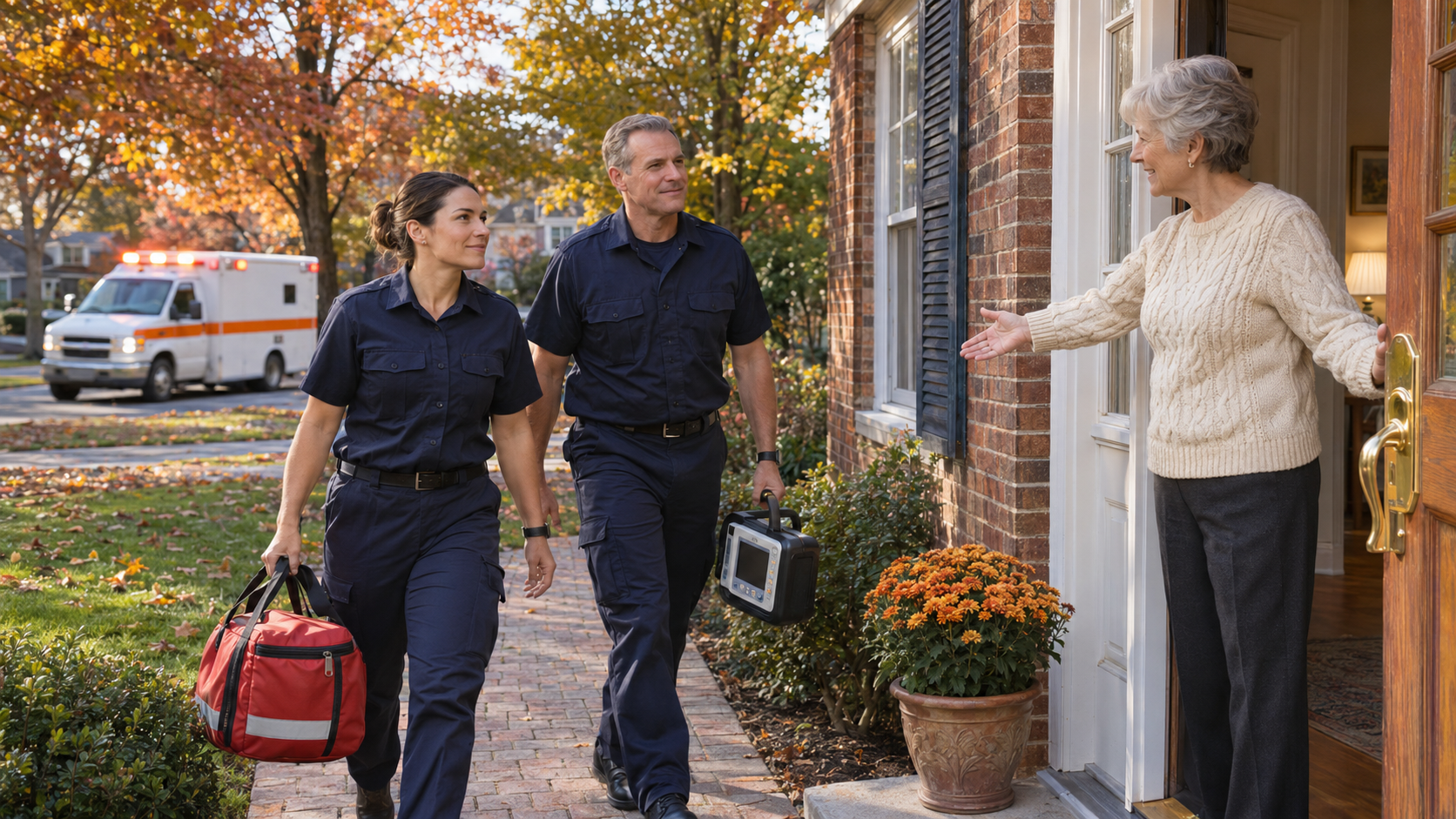
Stroke treatment begins the moment emergency medical services arrive, and the CDC says patients who are taken to the hospital in an ambulance may get diagnosed and treated more quickly than people who arrive another way. Emergency workers can alert the hospital staff before you get there, and they may take you to a specialized stroke center.
One more job falls to you or whoever is with you. Note the time when the symptoms first appear. The CDC says this helps health care providers determine the best treatment, and the hospital staff will ask for it.
Timing matters because the stroke treatments that work best are available only if the stroke is recognized and diagnosed within 3 hours of the first symptoms. For an ischemic stroke, the most common type, treatment can include a clot-busting medicine. The CDC says patients who arrive at the emergency room within 3 hours often have less disability 3 months later than those who receive delayed care.
When the Symptoms Go Away
Sometimes stroke symptoms fade after a few minutes. The CDC says that may be a transient ischemic attack, or TIA, sometimes called a mini-stroke, in which blood flow to the brain is blocked for only a short time. It is tempting to feel relieved and move on, and the CDC notes that many people ignore TIAs because they clear up.
The CDC treats a TIA very differently. It calls a TIA a medical emergency, just like a major stroke, and a warning sign of a future one. More than a third of people who have a TIA and don't get treatment have a major stroke within a year.
There is also no way to know at the beginning whether symptoms come from a TIA or a major stroke. So the advice stays the same, which is to call 9-1-1.
The Bottom Line
Learn the five sudden signs and the B.E. F.A.S.T. check, and share them with the people you live with. If one of those signs appears, call 9-1-1, note the time, and let the ambulance come to you.
The CDC's reason is simple. The chances of survival are greater when emergency treatment begins quickly.


