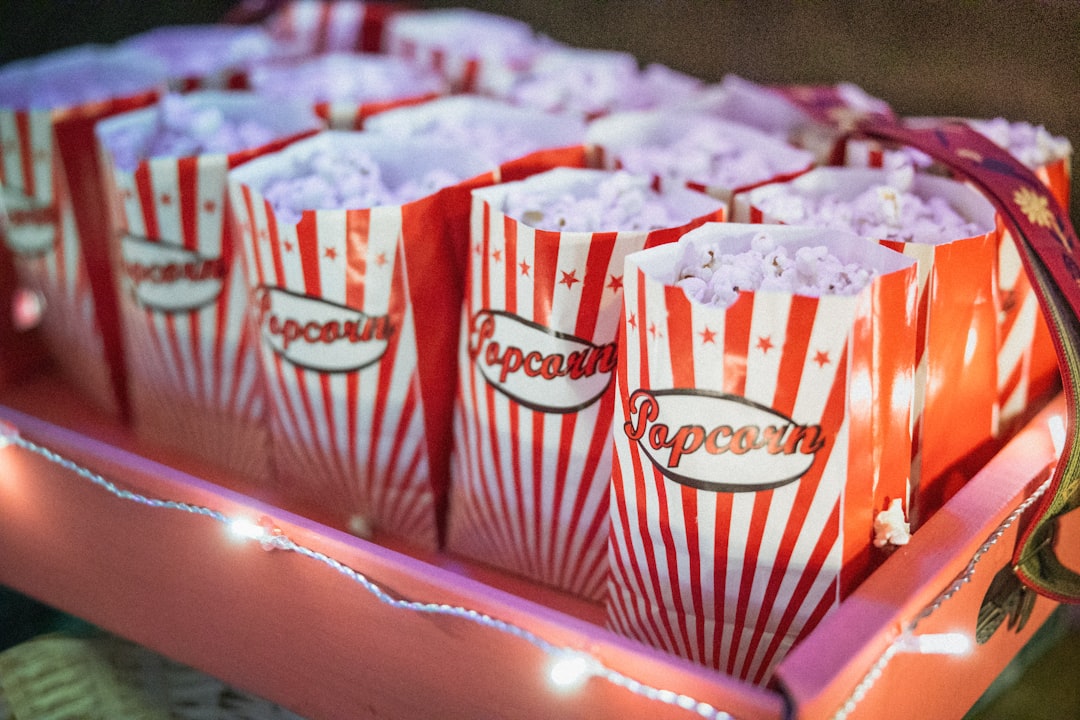
Think back to the last time you settled into a movie seat with a warm bag of popcorn in your lap. Hard to imagine it any other way, right? But for a long time, popcorn and the movies had nothing to do with each other. Theater owners did not just ignore popcorn; they actively kept it out.
The full story goes back much further than Hollywood. Food historian Joyce M. White and classic film historian Harry Marks helped piece it together for Reader’s Digest, and it turns out the road from ancient Peru to your local theater was a long one.
Popcorn Has Been Around for Thousands of Years
Popcorn is deeply American: North and South American, to be exact. The oldest ears of popcorn ever found were discovered along the northern coast of Peru. They have been radiocarbon-dated to 6,700 years ago, around 4600 BCE, and currently hold the Guinness World Record for the earliest known popcorn.
Before that discovery, the oldest evidence of people eating popcorn came from New Mexico, dating back about 5,600 years. White explains that the type of corn that makes popcorn, Zea everta, was one of the earliest domesticated forms of maize in Mexico and the American Southwest.
It did not reach the East Coast until the early 1800s. White says New England whalers most likely brought it north from South America.
Street Corners and Sugar Coatings
By the 1830s, Americans were popping corn in wire baskets or pans over the fire. Street vendors (known as popcorn men) sold it on corners and in hotels, where it was served alongside raisins and nuts for dessert. It became a staple at picnics, parties and festivals.
Sugar-coated popcorn and popcorn balls were popular treats of the era. By 1857, a company called The New England Popcorn Company was already selling pre-popped popcorn in decorative tin boxes. Not everyone was pleased. A Louisiana newspaper that year complained that the new product took away the simple pleasure of popping corn yourself over a winter fire. Some things never change.
The Machine That Started Everything
The big commercial turning point came at the 1893 Chicago World’s Fair. That is where Charles Cretors debuted a mobile popcorn-popping machine he had patented that same year. His original goal was to drum up interest in the machine itself, so he gave the popcorn away for free.
It backfired in the best possible way. People loved it so much they lined up to buy more on the spot. Cretors went on to develop horse-drawn popcorn wagons to take the snack into cities. But here is where the story takes a turn: movie theaters still wanted nothing to do with it.
Why the Movie Palaces Said No
In the early days of film, theaters were not just theaters, they were movie palaces. Marks describes them as designed to feel like opera houses, with plush carpeting and extravagant decor. The whole idea was to make going to the movies feel like attending a live performance.
A greasy, crunchy, cheap snack did not fit that picture. Theater owners worried about sticky floors, greasy armrests and popcorn kernels ground into expensive carpets. Concessions were considered beneath the experience they were trying to create.
There was also the noise. Early films were silent, and even though live musicians often accompanied them, owners did not want patrons crunching through the show.
The Depression Changed Everything
By the late 1920s, silent films had given way to talkies, so the noise argument faded. Then the Depression hit, and economics took over. Marks notes that by 1930, just one year after the market crash, American movie theaters were seeing as many as 90 million customers a week.
Even then, most theaters held the line. Vendors would set up outside and sell popcorn on the sidewalk, but Marks says some theaters made customers check their snacks at the door, just like a coat.
That changed when a Kansas City widow named Julia Braden walked into the Linwood Theater and convinced the owner to let her open a popcorn stand in the lobby. One stand became four. By 1931, Braden was earning over $14,000 a year, more than $330,000 in today’s money. Marks calls her the de facto Mother of Movie Theater Popcorn.
Theaters Got the Message
Once theater owners saw the numbers, they started popping their own corn and pushing out the independent vendors. Many older theaters had to be renovated just to accommodate the poppers, since their upscale designs had not included ventilation for cooking.
A theater manager named R.J. McKenna took it even further. In the 1930s, he deliberately lowered ticket prices to get more people through the door, so they would buy popcorn and food. In 1938, his theater brought in over $200,000. The math was impossible to argue with.
Today, concessions are a massive part of the business. Cinemark, one of the country’s top theater chains, made about 40 percent of its revenue from concessions in its most recent fiscal year, bringing in nearly $1 billion, according to the company’s SEC filing.
A Few Fun Numbers Worth Knowing
- Americans eat about 14 billion quarts of popped popcorn each year, roughly three cups per person per week.
- Popcorn makes up 60 percent of movie theater concessions, with candy, drinks and other food making up the rest.
- Theaters actually prefer yellow corn over white. It pops larger, which fills containers with less popcorn. That has been true since the Depression era.
- According to Fandango, 88 percent of moviegoers say they order popcorn regularly, and 94 percent say they order concessions of some kind.
- National Popcorn Day is celebrated every year on January 19.
So the next time you grab that bucket at the concession stand, you are taking part in something that took more than a century to become possible. From ancient Peru to a Kansas City lobby stand to a billion-dollar business, not bad for a handful of kernels.