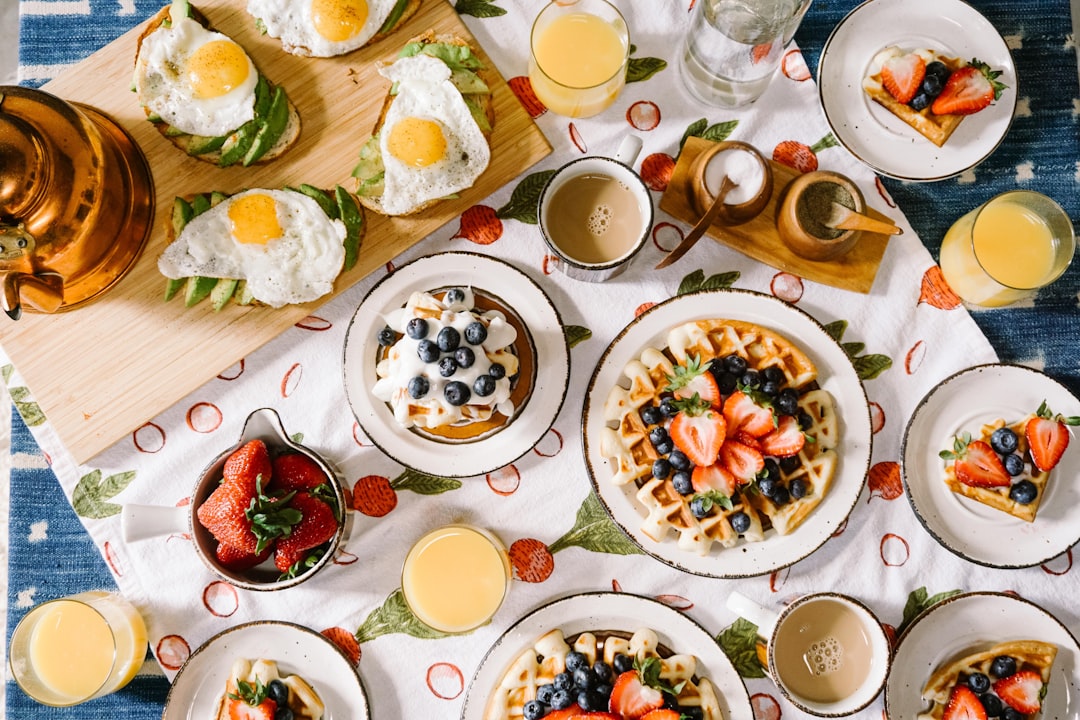
There was a time when breakfast was an event. Not a granola bar grabbed on the way out the door. Not a drive-through bag dropped in the passenger seat. A real, sit-down, take-your-time morning meal.
For our generation, that meant booths with laminate menus, coffee that never stopped coming, and a whole country full of breakfast chains that felt like old friends along the highway. Most of them are gone now. A few are barely hanging on. Here is a look back at six that helped make America’s mornings worth remembering.
Howard Johnson’s
Before there was an IHOP on every interstate, there was Howard Johnson’s. For more than two decades, it was the largest restaurant chain in the entire country, with more than 1,000 restaurants and 500 motor lodges stretching across the map.
The orange roof was impossible to miss. The 28 flavors of ice cream were impossible to forget. And for road trippers from the 1940s through the 1970s, the “Farmer’s Feast” and the “Country Boy’s Breakfast” were a genuine comfort after a long drive.
Founder Howard Johnson, a grade school dropout who started with a soda fountain inside a drugstore, never let go of his ice cream roots even as the chain grew into an American institution. After his son sold it in 1979 to the Imperial Group, Howard Johnson’s passed through the hands of Marriott and then Prime Motor Inns before its very last location, in Lake George, New York, closed in 2022. Even a cameo on Mad Men could not save it.
Bakers Square
If you loved a good skillet breakfast or a stack of pancakes at any hour of the day, Bakers Square had you covered. All-day breakfast was the chain’s calling card, and fans stayed loyal for years.
The story actually starts in Des Moines, Iowa, in 1969, back when it was called Mrs. C’s and was better known for pies, soups, and sandwiches. The breakfast menu did not arrive until 1983, when new owner Vicorp bought the chain and renamed it Bakers Square. At its peak in 2006, it had 143 locations. By 2009, nearly half had closed.
Today, Bakers Square products are sold across 19 states, but only a handful of restaurants still serve that beloved all-day breakfast alongside their famous cream and fruit pies.
Village Inn
For buttermilk pancakes done right, Village Inn was the answer for a lot of families. Founded in Denver, Colorado, in 1958 by Merton “Andy” Anderson and Jim Mola, it grew into a beloved casual diner with more than 200 locations nationwide at its height.
Part of the appeal was the simplicity. Good flapjacks. Fresh eggs. Kids-eat-free nights. All-day breakfast. A Wall Street Journal franchise ad in 1961 helped kick off the expansion, and through the 1980s and ’90s, Village Inn was a pancake empire.
Bankruptcy filings in 2008 and again in 2020 took a serious toll. About 100 locations are still open across the country, but the footprint is a fraction of what it once was.
Uncle John’s Pancake House
Speaking of pancakes, Uncle John’s Pancake House took the humble flapjack and turned it into an art form. Founded in California by former Dairy Queen franchise owners Jack and Anne Holder, the chain built its reputation on a menu that offered 18 different types of pancakes. Iowa corn. African banana. Some of them were priced at less than fifty cents.
Through the 1960s and ’70s, Uncle John’s had dozens of locations and a loyal following. Rising operating costs and labor shortages eventually wore the brand down. Today, just three locations survive, a small cluster in California and Ohio.
Shoney’s
If you grew up in the South, Shoney’s breakfast bar needs no introduction. More than 30 items piled high: pancakes, biscuits and gravy, bacon, scrambled eggs, and everything else a hungry morning could want. All you could eat. The chain grew to over 1,300 locations on the strength of that spread alone.
It all started in 1947 as a simple drive-in called the Parkette in Charleston, West Virginia. Founder Alex Schoenbaum eventually joined the Big Boy franchise family before going independent in 1984. That is when the legendary all-you-can-eat breakfast bar arrived.
A $130 million class action lawsuit in 1993 and a later bankruptcy filing slowed the momentum considerably. Shoney’s is still around, but now operates in just 16 states.
Mister Donut
The story of Mister Donut is really a story about a family feud that turned into one of the great fast-food rivalries in American history.
In 1955, Harry Winokur founded Mister Donut, reportedly after a bitter falling out with his brother-in-law, Bill Rosenberg, who had founded Dunkin’ Donuts. For the next 35 years, the two chains battled it out for the morning sweet tooth. Mister Donut built more than 550 U.S. locations famous for coffee and donuts, and nearly double that number in Japan.
The American rivalry ended in 1990 when parent company Allied-Lyons acquired both brands and converted almost every Mister Donut into a Dunkin’. Today, a single Mister Donut location survives in Godfrey, Illinois. The Japanese locations, nearly 1,000 of them, are still going strong.
Fast-food breakfast sandwiches and extra-large lattes are fine, we suppose. But there was something about sliding into a booth, wrapping your hands around a warm coffee cup, and knowing the morning had nowhere to be in a hurry. These six chains knew how to do breakfast right. We have not quite replaced them since.