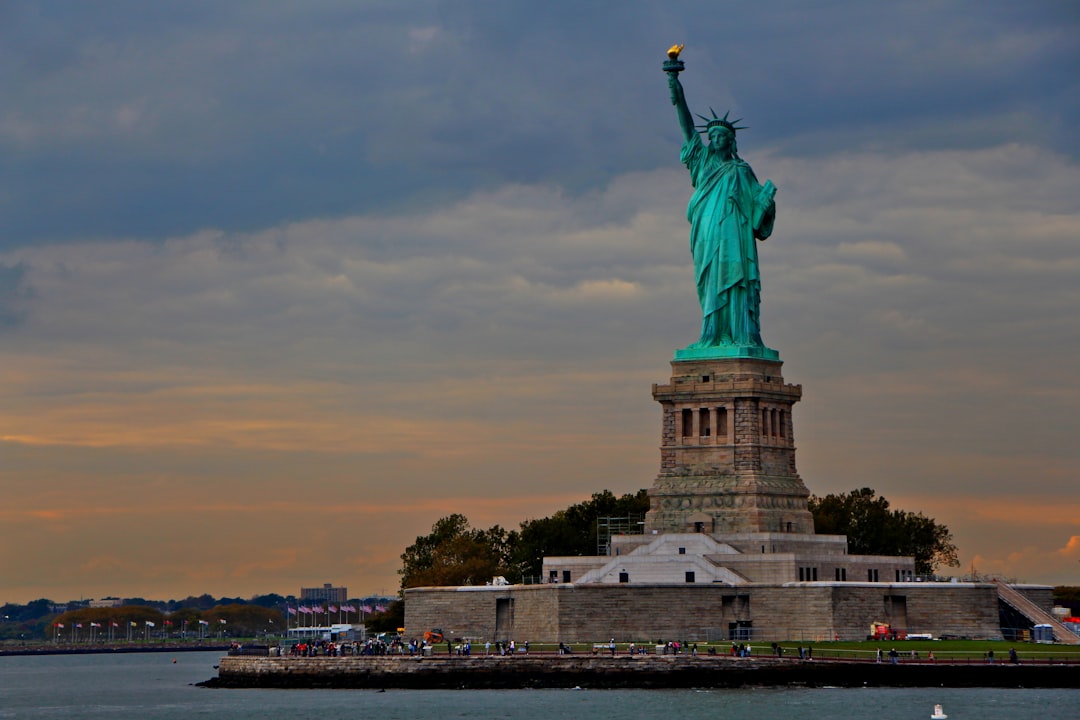
She has been standing in New York Harbor since 1886, torch raised high. You have seen her in photographs, maybe even in person. But there is something about the Statue of Liberty that most people never learn.
For a stretch of her early life, Lady Liberty was not just a symbol. She was a working lighthouse.
In 1886, the same year French sculptor Frédéric-Auguste Bartholdi finished his copper masterpiece, formally named Liberty Enlightening the World, President Grover Cleveland approved a plan to light the statue as a lighthouse. That torch was not just for show. It was meant to guide ships safely into the harbor.
And here is another detail worth knowing. Bartholdi had been planning this for a long time. He was issued a U.S. patent for his Statue of Liberty design back in 1879, a full seven years before the statue was completed.
The story of her light had a bumpy beginning, though. Her torch first blazed to life on the evening of November 1, 1886, just days after her dedication. One week later, the harbor went dark. Congress had never set aside money to keep the lamps burning, and the company that donated the electric equipment had only agreed to power them for seven days. One New York newspaper put it memorably, reporting that the torch was “suffering from an attack of red tape.”
President Cleveland was not about to let his country’s newest treasure sit in darkness. He ordered the statue placed under the care of the U.S. Lighthouse Board, and on November 22, 1886, her torch shone once more, this time as an official aid to navigation. That made her the first lighthouse in America to run on electricity. Every other lighthouse in the country still burned kerosene.
Someone had to keep those lights glowing, of course. That job went to Albert E. Littlefield, a machinist from Maine chosen for his rare knowledge of electricity. He served as the statue’s first and only head keeper, and he lived right there on the island with his wife Lucy and their children. For sixteen years, the Littlefield family called Lady Liberty home. Imagine raising your children with that view outside the kitchen window.
Truth to be told, she made a better symbol than a signal. It was said her torch could be seen 24 miles out at sea, though in practice the light proved too dim to be much help to vessels entering the harbor. In 1901, President Theodore Roosevelt ordered her transferred to the War Department, and on March 1, 1902, her light was officially retired as an aid to navigation.
Yet her finest years as a beacon were still ahead of her. In the early 1900s, millions of newcomers sailed into New York Harbor on their way to Ellis Island, and many said that catching their first glimpse of the statue stirred something powerful in them. She made them feel welcome. No lighthouse ever did more.
Think about that the next time you see her image. Generations of ships once found their way into New York by the light she carried. She was both a welcome and a beacon, at the very same time. The lamps in her torch stopped guiding sailors long ago. The light she stands for never went out.