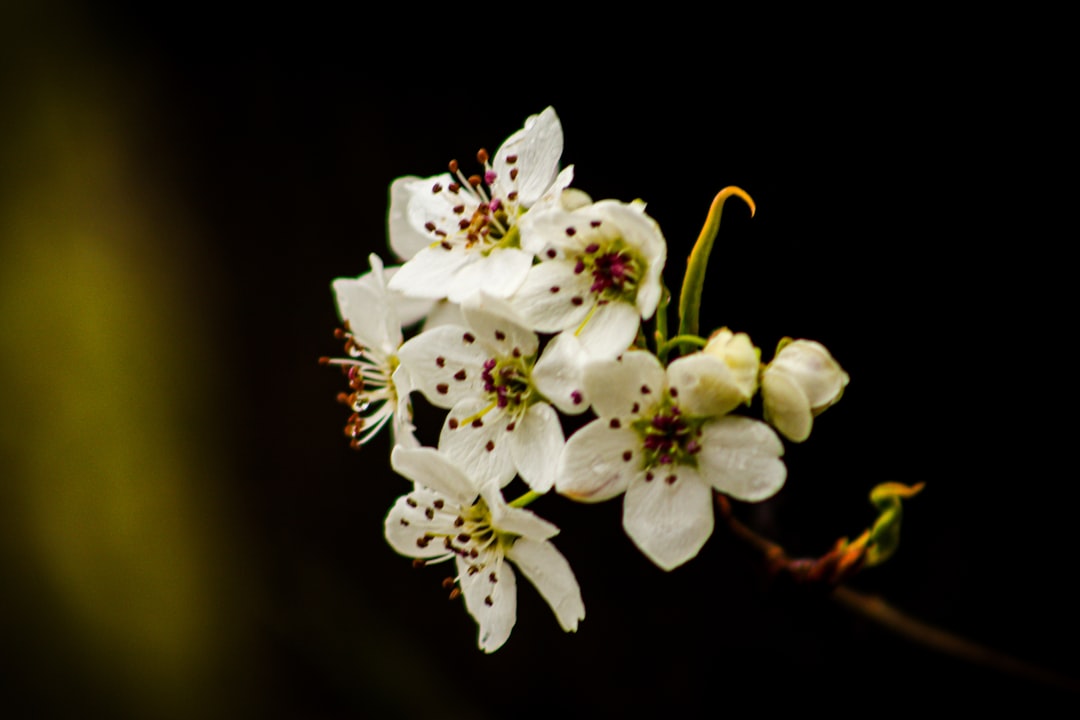
Every spring, you step outside and take a deep breath. The air smells like flowers and fresh starts. Then something stops you cold. There is a smell coming from that pretty little tree across the street, and it smells exactly like rotting fish.
You are not imagining it. That tree is real, and so is the smell. It is called the Bradford pear tree, and it has been a fixture in American neighborhoods since the middle of the last century.
Where Did This Tree Come From?
The Bradford pear is a variety of the Callery pear, which is native to East Asia. It arrived in the United States through the USDA in the early 1900s. The original purpose was practical: arborists wanted to use it as rootstock, grafting its hardy root system onto native pear trees to make them more disease-resistant.
Then, in the 1950s, the Bradford pear took on a life of its own. It grew fast, produced beautiful white flowers in spring, and did not drop messy fruit. Better yet, it thrived in all kinds of soil and weather, making it perfect for city streets and suburban yards. Lady Bird Johnson even planted one in downtown Washington, D.C., in 1966.
According to Michael Gildea, a certified arborist and president of the Professional Grounds Management Society, the Bradford pear was probably the most planted street tree in the United States through the 1980s and into the 1990s. Its popularity kept climbing through that era.
So Why Does It Smell So Bad?
Here is the surprising part. The Bradford pear does not smell bad by accident. It smells that way on purpose, at least from nature’s point of view.
Bees do not pollinate this tree. Flies do. And flies are attracted to the smell of decay. According to a 2025 paper published in the journal Science, certain plants (including the Bradford pear and the corpse flower) developed an enzyme that mimics the smell of rotting flesh to attract their fly pollinators. That enzyme is called DSS, and it evolved through changes in plants’ amino acid sequences across several plant lineages.
In other words, the smell is an evolutionary advantage. The tree is doing exactly what it was designed to do. We just happen to find it revolting.
Here Is Something Interesting, Not Everyone Smells It
You may have a neighbor who walks right past a Bradford pear and notices nothing. That is not selective hearing. It is selective smelling, and it comes down to genetics.
According to the Monell Chemical Senses Center, humans have about 400 different smell receptors. Each of those receptors can vary slightly from person to person based on your genes. That means everyone has their own unique sense of smell.
Depending on your particular set of receptors, a Bradford pear might smell faintly floral to you, or mildly unpleasant, or like a bucket of fish left in the sun. There is a wide range, and none of it is wrong.
The Other Problem With Bradford Pears
The smell is actually the least of this tree’s troubles. Because the Bradford pear is not native to North America, it has no natural checks on its growth. No local pests, no diseases, no animals that keep it in check. That makes it an invasive species, one that can spread rapidly and crowd out native plants in both urban and rural areas.
There is also a structural problem. Around the 20-year mark of the tree’s roughly 25-year life cycle, Bradford pears start to fall apart. Their wood is weak, and their branch joints are flimsy. Heavy snow or strong winds can send large branches crashing down and sometimes bring down power lines.
Because of all this, some states have already banned the planting of new Bradford pears and are working to phase out existing ones.
Interestingly, one Bradford pear became a symbol of remarkable toughness. A tree that survived the September 11 attacks still stands at Ground Zero in New York City as a symbol of survivorship.
Can You Do Anything About the Smell?
The honest answer? Not really. Gildea puts it plainly:
“Unfortunately, I don’t think there’s anything you can do about the odor because when it flowers, it flowers.”
The one piece of good news is that the bloom period is short. The smell does not last long.
If you are thinking about planting a new tree, Gildea has a suggestion. The serviceberry tree produces similar white flowers in spring, stays relatively small, and does not drop messy fruit. Best of all, no smell. It has all the charm of the Bradford pear without any of the drama.
So next spring, when that familiar stench drifts your way, at least you will know exactly what you are dealing with.