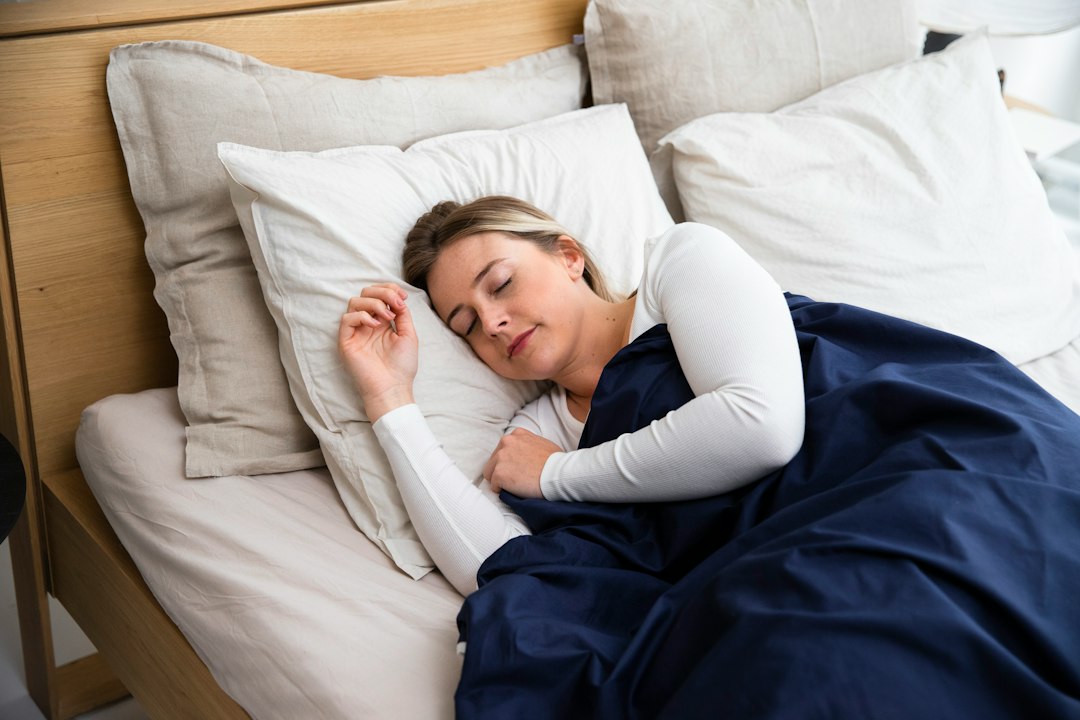
You already know the basics. Keep your room cool and dark. Stick to a regular schedule. Skip the coffee after 3 p.m. Good. Done.
But what if you are doing all of that and still not sleeping well? Sleep specialist Dr. Michael Breus presented some ideas to 10Almonds you may not have tried yet.
Start With Your Eyes
Before you even turn off the light, try a little eye care. Dr. Breus recommends warming your palms by rubbing them together, then gently cupping them over your open eyes. The warmth helps ease eye strain and signals your body to relax.
If you prefer something more hands-off, try placing a warm compress over your eyes for three to five minutes. According to Dr. Breus, this can reduce eye strain, boost circulation, and help your body ease into rest.
Warm Up Your Feet
Here is one that sounds simple but really works for many people: wear socks to bed. Or warm your feet with a heating pad or a foot bath before you turn in. Dr. Breus says warming the feet improves circulation and helps your body regulate its temperature, both of which support better sleep.
Watch Your Naps
A midday nap can be a lovely thing. But if yours are running long or happening late in the afternoon, they may be robbing you of sleep at night. Dr. Breus advises keeping naps under 30 minutes and finishing them before 2 p.m. That way your natural sleep drive stays strong when bedtime rolls around.
Check Your Medications
This one is easy to overlook. Some medications and supplements can interfere with sleep without you realizing it. Dr. Breus suggests going through everything you take, prescription and over-the-counter, with your doctor or pharmacist to see if anything on the list might be keeping you up.
Think About Your Sleeping Position
Dr. Breus recommends sleeping on your back or your left side to reduce pressure on joints. He also notes that left-side sleeping can ease the symptoms of acid reflux if that is something you deal with.
It is worth knowing that Dr. Breus holds a PhD in sleep science rather than a medical degree. The source article points out that his advice on back sleeping runs counter to what is generally considered best for heart health and brain health, and that digestion works the same regardless of which side you sleep on due to how the intestines naturally move.
Invest in the Right Pillow
Not all pillows are created equal. Dr. Breus recommends choosing a high-quality, supportive pillow matched to your sleep position. The right pillow can improve comfort, keep your spine properly aligned, and make a noticeable difference in how you feel in the morning.
Small changes, tried one at a time, can add up to noticeably better nights. Any one of these might be the thing that finally helps.