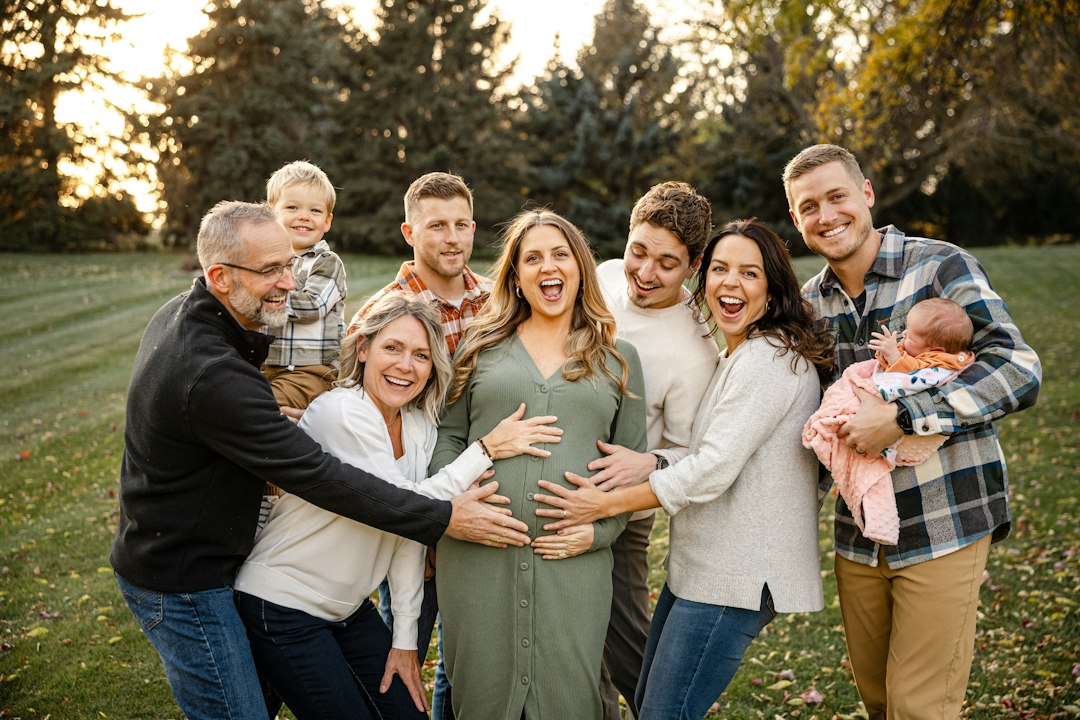
Families don’t stop expanding once the children are grown. Sometimes a new chapter begins later in life when two people find companionship and build a life together, bringing with them their own adult children, grandchildren, family traditions, and decades of memories.
It’s an exciting time, but it can also require patience. Unlike young families starting from scratch, blended families later typically combine lives that are already full. As a result, the way these families evolve and connect differs. Relationships need time to develop, and that’s perfectly normal.
Every Relationship Has Its Own Pace
It’s natural to hope that everyone will immediately feel like one big family. Sometimes that happens. More frequently, relationships develop gradually through small moments: shared meals, holidays, birthdays, and everyday conversations.
Adult children, grandchildren, and each side’s siblings don’t need to show an instant kinship for the family to be successful. Respect and kindness are often the first—and most important—steps.
Make Room for Everyone’s Traditions
Every family has its own customs. These sometimes define the routine of family gatherings. Perhaps one family always exchanged homemade gifts on Christmas Eve, while the other reserves all gifts for the holiday morning. Maybe someone has hosted every Thanksgiving for years in one family, while the other alternates each year. Perhaps one side spends a week every summer at the same beach, whereas the other never went on vacation as a group.
It can be hard enough to accommodate differing traditions simply when they’re new, but that becomes even tougher when they overlap, such as on holidays. Rather than deciding which traditions should “win,” look for opportunities to combine them or create new ones together. A new tradition doesn’t replace the old ones. It simply becomes another thread in the family’s story.
Avoid Comparing Relationships
One of the easiest traps a blended family can fall into is comparing new relationships with long-established ones. The bond you’ve built with your own children or grandchildren has had decades to mature. New relationships simply haven’t had that time and the memories that come with it.
Instead of expecting the same closeness immediately, appreciate each relationship for what it is today and allow it to grow naturally. One day you may very well feel as if you’ve known those people most of your life.
Small Moments Matter More Than Grand Gestures
Relationships are often built in ordinary ways:
- sharing coffee before a family gathering
- attending a grandchild’s school concert
- working side by side in the garden
- preparing a holiday meal as a team
- meeting for lunch after running errands
- celebrating birthdays together
These simple experiences gradually create shared memories, and shared memories build connection.
Give Everyone Permission to Be Themselves
Blended families don’t need everyone to have the same personality or interests. Like all families, blended families contain a multitude of differences. Some family members are naturally outgoing, while others take longer to feel comfortable. Some enjoy large gatherings, while others prefer quieter visits. Some might enjoy a day-long adventure into the city, while others might favor an afternoon at a nearby park.
While diverging interests and preferences might initially seem detrimental to cohesion and connection, it is these very differences that allow us to complement one another and make the group stronger as a whole. That’s why it’s so vital to create a relaxed and welcoming atmosphere that allows people to participate in ways that feel natural for them.
Focus on the Relationship in Front of You
One of the nicest ways to strengthen a blended family is to get to know each person individually. Ask about their hobbies, work, favorite books, travel experiences, or traditions. When people feel seen for who they are—not simply for the role they play in the family—they’re more likely to feel that they truly belong.
And once you’ve gotten to know one person, it becomes much easier to get to know someone else.
Families Continue to Grow
One of life’s most encouraging truths is that family isn’t fixed. It expands through marriages, friendships, births, adoptions, and unexpected connections. Over time, people who once felt like newcomers become impossible to imagine the family without. That transformation rarely happens all at once. It happens through years of showing up, sharing life, and making room for one another.
Why This Matters
Blended families that come together later in life remind us that it’s never too late for a family to grow. While every relationship develops at its own pace, patience, kindness, and a willingness to create new memories together can build connections that enrich everyone involved.