
Remember when Bigfoot sightings were all over the news? Or when the Loch Ness Monster had everyone buzzing? Most of us grew up hearing tales of mysterious creatures that science couldn’t explain.
Well, here’s the thing. A handful of those “impossible” animals turned out to be completely real. Scientists dismissed them for years (sometimes centuries) before the proof finally showed up.
Here are six creatures, according to Mental Floss, that made the leap from legend to fact.
The Komodo Dragon
Imagine hearing rumors of a dragon-like monster living on a remote Indonesian island. That’s exactly what Dutch Lieutenant Jacques Karel Henri van Steyn van Hensbroek heard in 1910. He was stationed on Flores Island when locals told him about a “land crocodile” on the nearby island of Komodo.
He went to see for himself. By 1912, he had sent a photograph and the creature’s skin to Peter Ouwens, director of the Zoological Museum of Bogor. The animal was real and remarkable. The Komodo dragon is Earth’s largest living lizard, growing up to 10 feet long and weighing up to 330 pounds.
In 1926, an expedition led by William Douglas Burden captured two live Komodo dragons and brought them back to the U.S. for display at the Bronx Zoo. That adventure also left a mark on pop culture: Burden’s friend, co-director Merian C. Cooper, used the story as inspiration for the 1933 monster movie King Kong.
The Okapi
During the 1800s, European explorers in central Africa kept hearing about a shy, striped, zebra-like animal living deep in the forest. African people had known about it for thousands of years, they called it the o’api, which became okapi in English. But foreign explorers couldn’t spot one, and some flat-out doubted it existed.
British explorer Sir Harry Hamilton Johnston was determined to prove them wrong. He never saw a live okapi himself, but in 1901 he acquired a complete skin and two skulls. That was enough. Not only did it confirm the animal was real, but it also revealed a surprise: the okapi wasn’t related to the zebra at all. It’s actually a relative of the giraffe. Today, many zoos around the world have okapi on display.
The Jackalope
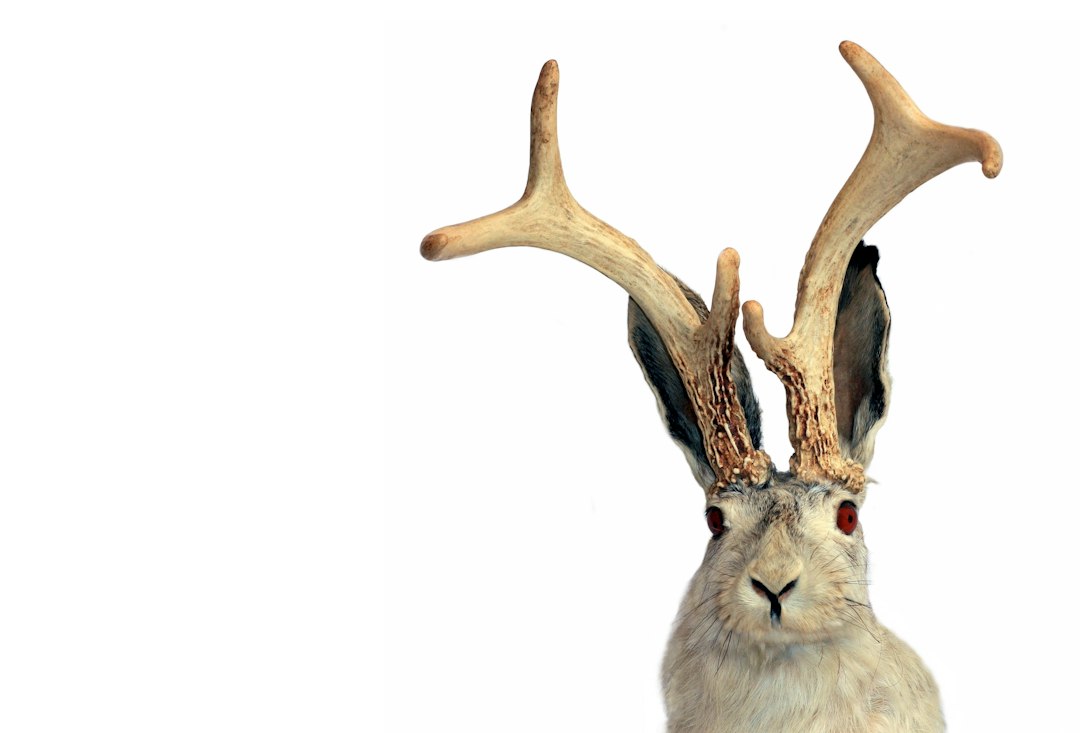
A rabbit with antlers sounds like a tall tale from a roadside gift shop. And plenty of jackalope “specimens” are exactly that, taxidermy hoaxes. But the idea of a horned rabbit isn’t pure fiction.
Regular rabbits can be infected by something called Shope papilloma virus. The virus causes growths that look remarkably like horns or antlers, sprouting from the animal’s head and face. The virus wasn’t scientifically described until 1933, which means that for hundreds of years, people who spotted these unfortunate rabbits in the woods had no explanation for what they were seeing.
The taxidermy tradition took off in 1932, thanks to a Wyoming man named Douglas Herrick. But the legends of horned rabbits go all the way back to medieval times, all because of a very real, very strange virus.
The Giant Squid
Stories of the kraken (a sea monster that dragged ships and sailors to the bottom of the ocean) go back to the 13th century. For a long time, most people thought it was pure fantasy.
Then, in 1861, the crew of the French ship Alecton tried to haul one aboard. The creature slipped back into the sea during the attempt, but the incident was hard to ignore. That episode later inspired the famous squid scene in Jules Verne’s Twenty Thousand Leagues Under the Sea.
In 1873, a Canadian fishing crew came ashore with something even harder to dismiss: a tentacle that measured 20 feet long. The Reverend of St. John’s, Newfoundland, who examined it, wrote: “I was now the possessor of one of the rarest curiosities in the whole animal kingdom. The veritable arm of the hitherto mythical devilfish, about whose existence naturalists had been disputing for centuries.”
By the end of the 1870s, enough evidence had piled up that scientists officially declared the giant squid real. Even so, the animal stayed largely out of sight. It wasn’t until the 21st century that photos and footage of giant squid in their natural habitat were finally captured.
The Devil Bird
Sri Lankan folklore tells of a creature called the Devil Bird (or Ulama) whose cry is a terrible omen. One 1907 account in Sydney’s Sunday Times described the sound as resembling “nothing so much as the scream of a human being undergoing the most terrible torture.”
For years, the Devil Bird was written off as superstition. But in 1907, scientists confirmed that a real bird was out there making that horrifying sound. It was initially thought to be the brown wood owl. Today, it’s widely believed to be the spot-bellied eagle owl, which even has dramatic ear tufts that fit the legend. Scientists haven’t fully confirmed which species is responsible for the cry, but the bird itself is very real.
The Mountain Gorilla
Throughout the 1800s, explorers in East Africa heard stories of enormous, hairy, humanlike creatures living on the slopes of the Virunga Mountains. Nobody from the outside world had ever verified it.
That changed in 1902. Captain Robert von Beringe of Germany was climbing Mount Sabinyo when he spotted a troop of large primates. His team shot two of them. Only one could be recovered, pulled from a ravine by rope, which gives you an idea of the animal’s size. Males can weigh around 400 pounds.
The remains were sent to the Zoologisches Museum in Berlin, where Professor Paul Matschie identified it as a new species. The animal’s formal scientific name is Gorilla beringei beringei, named after the captain who found it. Most of us know it simply as the mountain gorilla. Sadly, the species has been on the endangered list since 2018.
It’s a good reminder that the natural world still holds surprises. Some of the creatures we once called myths were simply waiting to be found.