You have probably seen it a hundred times. On church walls, in art books, on calendars, maybe even on a jigsaw puzzle. Leonardo da Vinci’s The Last Supper is one of the most recognized images in the world.
But here is something worth knowing: most people have been looking right past some extraordinary secrets for over 500 years.
Leonardo painted this mural between 1495 and 1498 on the wall of a convent’s dining hall in Milan. It looks like a straightforward depiction of a famous biblical meal. It is anything but. He quietly packed it with hidden symbols, mathematical puzzles, and at least one secret that went completely undetected until 2007.
Let’s take a closer look at six of them.
1. The Figure That Sparked a Famous Conspiracy Theory
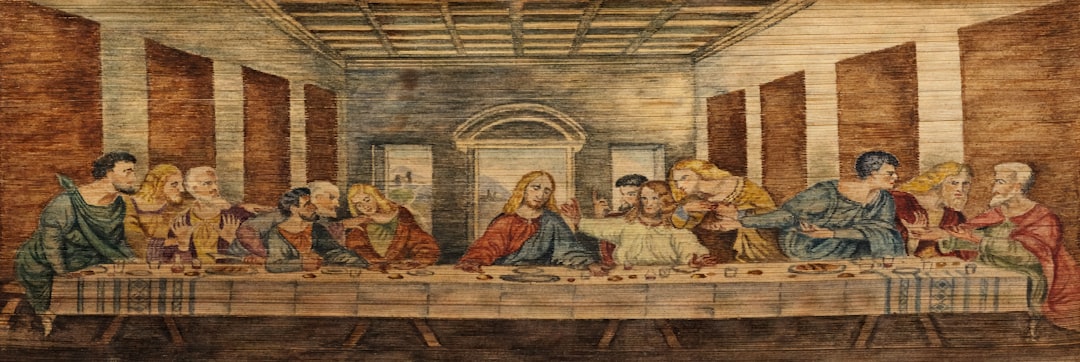
You may remember the stir that Dan Brown’s 2003 novel The Da Vinci Code caused. Much of it centered on a figure seated right next to Jesus in the painting. Traditionally identified as Saint John, this figure has soft features and long flowing hair, quite different from the other disciples around the table.
Conspiracy theorists have long argued this is actually Mary Magdalene, secretly painted beside Christ to hint at a hidden marriage.
They point to a geometric illusion to back it up. The gap between Jesus and this figure, created by their leaning postures, forms a clear letter V, an ancient symbol representing the feminine. Pull back further, and their clothing and body alignments together trace a letter M, said to stand for Mary Magdalene or Matrimony.
Art historians point out that young male figures in Renaissance art were routinely painted with softer, more delicate features to symbolize purity. But the visual geometry is genuinely there. Whether Leonardo planned it or not, the V and the M have fueled art history’s most enduring romantic mystery for decades.
2. No Halos and Why That Was a Bold Choice
If you had been hired to paint the most important dinner in Christian theology, your first instinct probably would have been to give everyone a glowing halo. That was simply what you did. For centuries, halos were the standard signal for holiness in religious art.
Leonardo left every single one out.
Look above the heads of Jesus and the twelve apostles. Not one halo in sight. Art historians believe this was entirely deliberate. Leonardo was fascinated by human nature and anatomy, and he wanted viewers to feel the raw emotion of the moment: the shock, the panic, the vulnerability, rather than observe it safely from a distance through layers of divine symbolism.
He did not leave Christ entirely unmarked, though. Instead of a golden ring, he placed a large window directly behind Jesus. The light pouring through it creates a natural, architectural halo. He did not erase divinity. He just expressed it differently.
3. Judas and the Spilled Salt
If you have ever tossed a pinch of salt over your shoulder after knocking over the shaker, you already understand what Leonardo was doing here.
Look closely at Judas Iscariot’s right elbow in the painting. At the moment Jesus announces that someone at the table will betray him, Judas jolts backward in what looks like a nervous reaction and his elbow knocks over a small salt cellar on the table. He is also clutching a leather pouch, understood to hold his thirty pieces of silver.
To modern eyes, it looks like a clumsy accident. To a 15th-century audience, spilling salt was a serious bad omen, a recognized symbol of broken trust and coming misfortune. Leonardo placed that tiny overturned container right in front of the guilty man as a visual signal. The betrayal, he was telling us, was already underway before anyone said a word.
4. The Mathematics Hidden in Every Corner
Leonardo was not only a painter. He was a mathematician and an engineer, and he brought all of it to this wall.
He organized the entire composition around two numbers: three and four. Three represented divinity and the heavenly realm. Four represented the earthly world. Jesus himself is posed to form a perfect triangle at the center of the frame. Behind him, three open windows light the back wall. The ceiling features six rows of coffers: three and three.
The twelve apostles, three times four, are arranged into four groups of three. The side walls carry four sets of tapestries on each side, framed by four structural supports around the windows.
Leonardo was making a visual argument that heaven and earth were not just connected, they were sitting down to the same meal. For a man who believed that math and art were one and the same, this was the ultimate proof.
5. The Knife Nobody Noticed for Centuries
Look at the cluster of disciples to the left of Jesus in the painting. Amid all the hand gestures and whispered conversations, there is a hand gripping a long, unsheathed knife pointed away from the table.
For a long time, thanks to centuries of deterioration, viewers thought this arm belonged to no one, a ghostly phantom limb floating in the composition. Modern restoration work traced it back to Simon Peter.
Peter has his arm twisted at an unnatural angle, hiding the blade behind his back while leaning forward to speak to Saint John. According to the New Testament, just hours after this dinner, Peter drew a sword in the Garden of Gethsemane when soldiers came to arrest Jesus, cutting off the ear of a servant named Malchus. Leonardo was not just painting a reaction to the news of betrayal. He was showing us that Peter had already made up his mind.
6. A Secret Song in the Bread Basket
This one went undetected for over 500 years. It was not discovered until 2007.
Italian musician Giovanni Maria Pala was studying the painting when he noticed something odd about the arrangement of the bread loaves and the positions of the disciples’ hands along the table. He realized that if you draw a standard musical staff across the painting, those bread loaves and hands line up precisely where musical notes would fall on the staff.
He tried playing the notes from left to right. It sounded like nothing recognizable. Then he remembered something important: Leonardo was left-handed and wrote all of his personal notebooks in backward mirror-script, right to left.
Pala reversed the sequence and read the table from right to left instead. What emerged was a somber 40-second composition meant to be played on a pipe organ, a quiet funeral requiem hidden inside one of the most famous paintings ever made.
Five hundred years of viewers looked right at it. One musician finally heard it.
Leonardo da Vinci painted The Last Supper over 500 years ago, and it is still giving up its secrets. That is the thing about a true masterpiece, the longer you look, the more it says.