If you have ever walked a beach early in the morning, you know the small thrill of spotting something unusual in the sand. Usually it is a shell or a crab in a hurry.
This September, lifeguards patrolling at night in Orange County, California, saw a sea turtle digging in the sand. Their first thought was that it might be sick.
“We just don’t see this very often,” Trevor McDonald, marine safety chief at the Huntington Beach Fire Department, told The Associated Press. “Then they observed the turtle starting to lay eggs.”
The turtles were olive ridleys, and they made history. NOAA Fisheries is the federal agency that looks after sea turtles in the ocean. It says a nest dug near Seal Beach on September 16 is the first ever recorded for any sea turtle species on the U.S. West Coast.
Where Did These Turtles Come From?
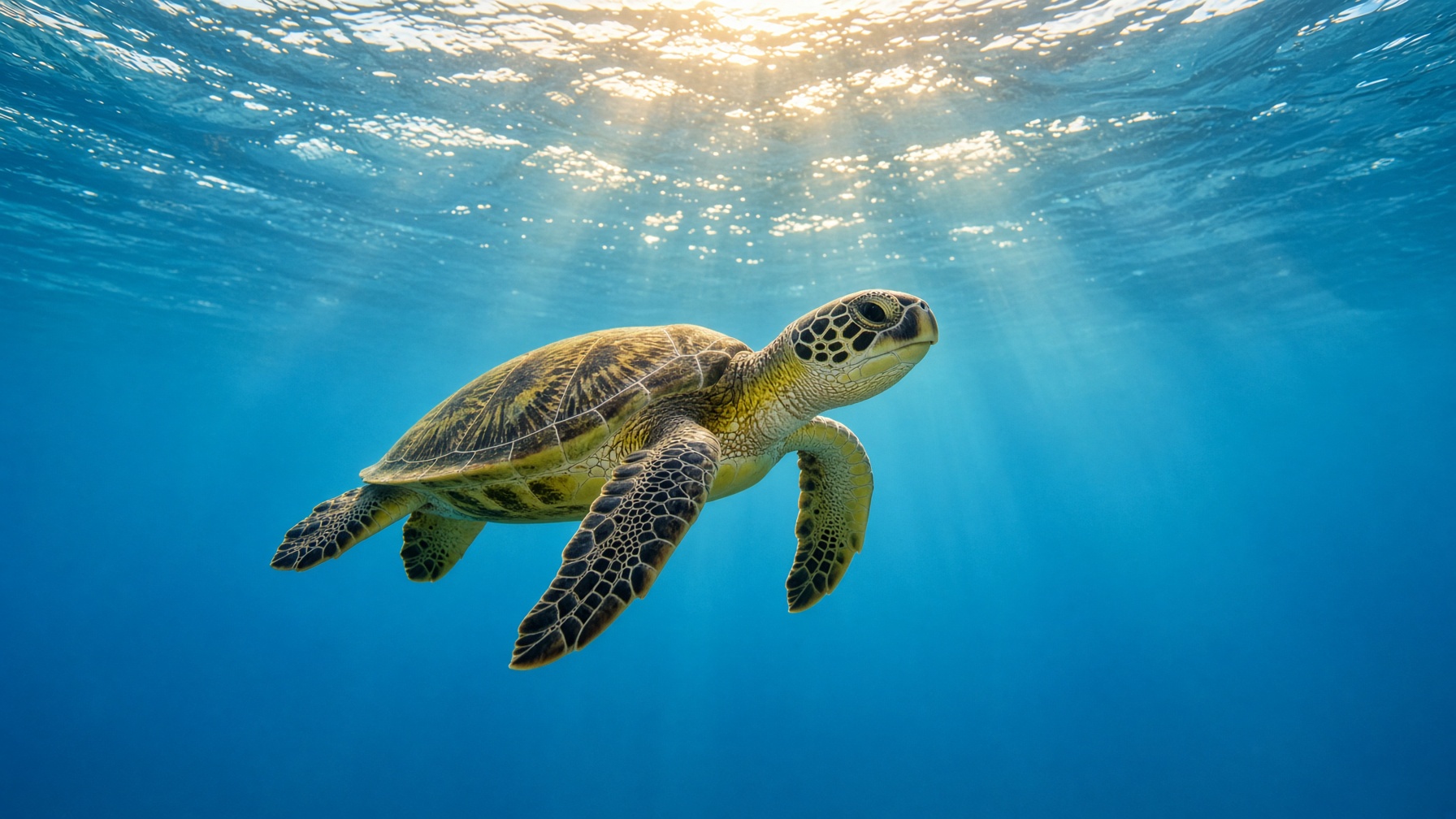
Olive ridleys are the smallest of the sea turtles, and adults weigh up to 100 pounds. They live around the world, mostly in tropical waters.
Before September, NOAA says, the closest known nesting site was near Todos Santos, in Baja California, Mexico. Some olive ridleys nest in crowds of more than 1,000 turtles at once. Others go it alone.
Three days after the first nest, a second turtle dug a nest near the Huntington Beach Pier, about 8 miles away.
Was it the same turtle? Dr. Cali Turner Tomaszewicz, a research biologist at NOAA’s Southwest Fisheries Science Center, compared photos to find out. She studied each turtle’s body shape, its barnacles, and the pattern of large scales on its shell, which NOAA likens to a human fingerprint. The answer: two different turtles.
Leave it to the barnacles to help settle the question.
Why did they nest so far north? NOAA says the exact reason is uncertain. Warm ocean water from ongoing marine heatwaves, along with a coming El Niño, is likely a key factor. Olive ridleys are also natural wanderers, and the agency says a navigational mistake may have played a part.
What Happened to the Eggs?
Both nests were fenced and roped off, with signs explaining what lay beneath. People came to see them. One mother, Heidi Stephen, told the AP her 9-year-old son begged her to take him. “It’s so magical,” she said.
George Zamora said he hoped the eggs could survive tides, storms, and popular beach events. “Let them do their thing,” Zamora said. “Let them be born.”
Then came a worrying forecast. Powerful waves churned up by a hurricane were on the way. On September 25, a team of scientists from several agencies gathered the eggs and carried them to the Aquarium of the Pacific in Long Beach.
According to the Long Beach Post, the eggs now rest in temperature-controlled containers built to mimic a sandy nest, out of public view. Incubation usually takes 45 to 60 days. If the eggs hatch, likely around early November, the aquarium plans to return the hatchlings to the beaches where their mothers dug the nests. From there, the little turtles would cross the sand to the ocean on their own.
That “if” matters. NOAA says this is a first, and the agency does not know whether the eggs were fertilized or can hatch.
Could They Ever Come Back?
The effort to protect the nests drew a long list of helpers. They include federal and state wildlife agencies, both cities, the U.S. Navy, a university, and a community group called the Surfside Colony Community Organization. NOAA is also watching for more nests, since an olive ridley usually nests two or three times a season, about two weeks apart.
Female sea turtles tend to return to the area where they hatched. NOAA says about 15 years after hatching, some come back as adults to nest on the very beach where they were born. Jeff Flocken is the aquarium’s president and chief executive. He told the Long Beach Post that if the eggs hatch and the young turtles survive, they could one day return to nest on that same stretch of shoreline.
If you see a turtle on a West Coast beach, NOAA asks that you tell a lifeguard or call its stranding hotline at (562) 506-4315. The agency also asks people to leave nests, fences, and signs alone.
So the next time something unusual catches your eye along the water, look twice. In Orange County, lifeguards took a second look at a turtle they thought might be sick and found history being made in the sand. With a little luck, that history returns to the same beaches in about 15 years.